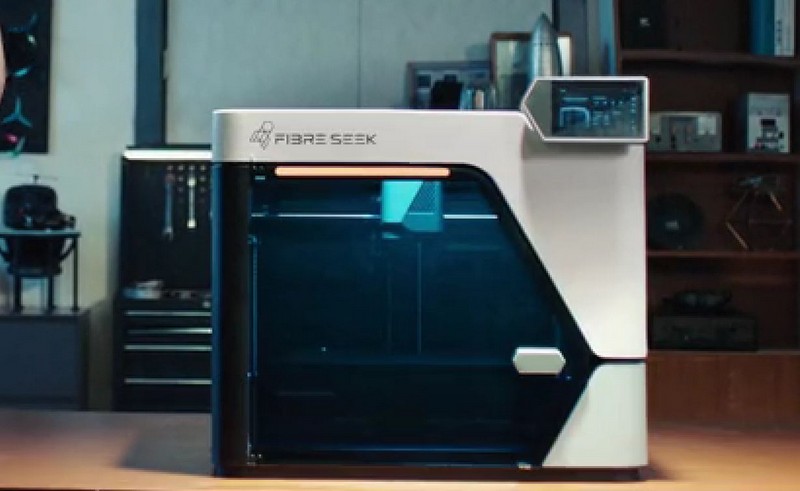
FibreSeeker 3 by FibreSeek is an enclosed desktop 3D printer that combines Composite Fiber Co-extrusion (CFC) for continuous-fibre reinforcement with Fused Filament Fabrication (FFF) for standard thermoplastic printing. Its dual-nozzle system (0.4 mm FFF / 0.7 mm CFC with a built-in fibre cutter) supports three workflow modes—High Speed (FFF), High Strength (CFC+FFF), and Hyper Strength (CFC)—allowing fast prototyping or reinforced, high-strength parts. The printer offers ±0.2 mm accuracy, 50 µm minimum layer thickness, FFF speeds up to 500 mm/s with active vibration compensation, a 300×300×245 mm build volume, active chamber heating (max 65 °C), and FibreSeek Aura slicing software with open-format G-code export. Operation is via a 5-inch touchscreen with a built-in 1280×720 live-view camera. FibreSeeker 3 has been featured on Kickstarter as a "Project We Love."
The FibreSeeker 3 is a dual-process system combining Composite Fiber Co-extrusion (CFC) and Fused Filament Fabrication (FFF), built around three manufacturer-defined operating modes: High Speed Mode (FFF-only), High Strength Mode (CFC + FFF dual-nozzle), and Hyper Strength Mode (CFC-only).
For fine detail and surface finish in standard printing, the FFF nozzle diameter is 0.4 mm, minimum layer thickness is 50 µm, and printing accuracy is ±0.2 mm.
Max FFF speed is 500 mm/s. For consistency at high speed, active vibration compensation maintains ±0.05 mm dimensional accuracy even at 500 mm/s.
The platform is designed to stabilize first layers and repeatability with Fully Automatic Leveling, and the on-device workflow includes auto-levelling and smart calibration for flawless adhesion and consistent layers.
Cooling and thermal stability use closed-loop control across the part cooling fan, hotend cooling fan, and main control board fan.
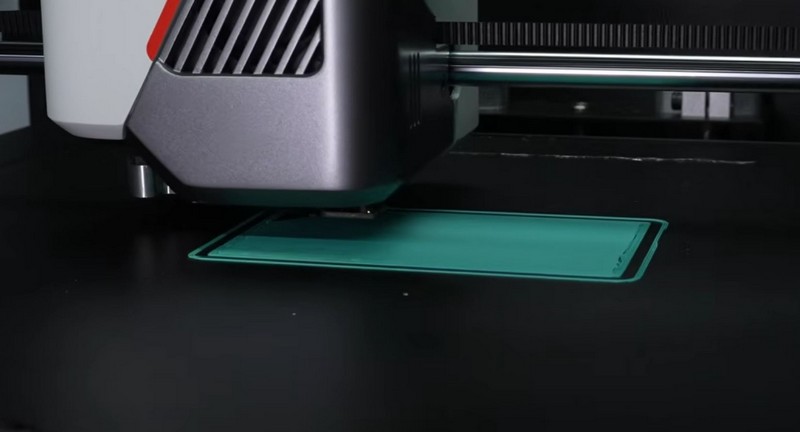
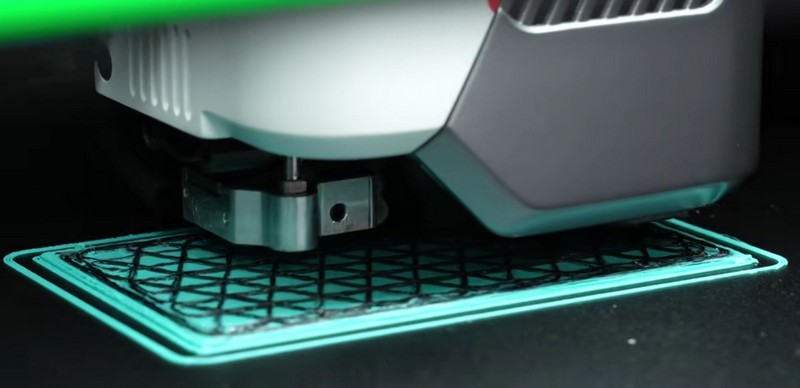
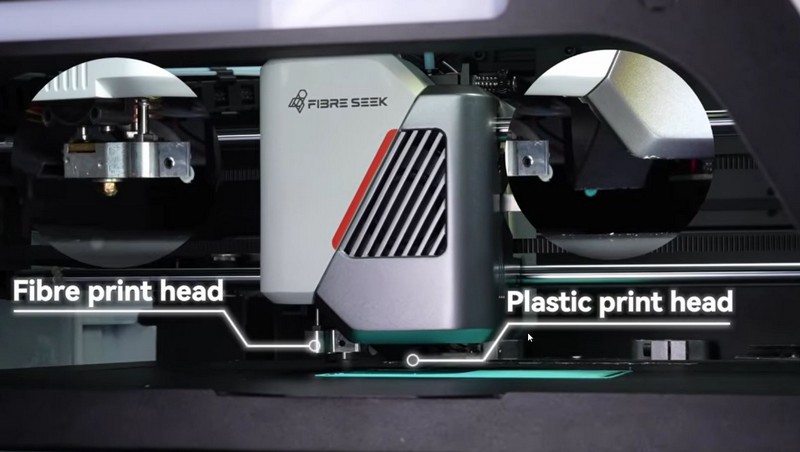
In reinforced printing, FibreSeek's CFC system uses a dedicated 0.7 mm CFC nozzle with a built-in Fibre Cutter with a max CFC speed of 20 cc/h, so reinforcement deposition is inherently slower than the FFF passes.
In third-party hands-on testing, CFC deposition is visibly slower than plastic printing. The left-head process merges molten thermoplastic with continuous fiber during deposition, reheating the previously printed material as it lays fiber, which can improve bonding at the reinforced regions.
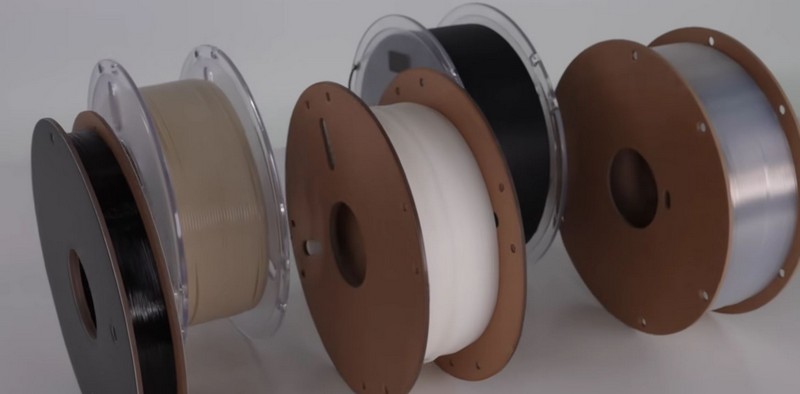
The FibreSeeker 3 supports six FFF thermoplastic filament types: PLA, PETG, PC, PA, PACF, and PETGF, all using 1.75 mm filament.
For continuous‑fibre reinforcement via Composite Fiber Co‑extrusion (CFC), it uses proprietary continuous fibres (X‑CCF and X‑CGF) stored in the printer's dedicated fibre compartment.
Material capability is supported by an all‑metal hotend with a hardened steel nozzle capable of up to 350 °C, an actively heated chamber up to 65 °C, and a heated bed up to 110 °C with fully automatic leveling.
In the video by YGK3D, the FibreSeeker 3 printed test parts using PLA, PETG, and continuous carbon fiber (X‑CCF) in both standard and reinforced modes, producing high-strength components with fine detail and smooth surfaces, including a 37-minute transparent Benchy and reinforced hooks capable of supporting over 235 lbs.
Build volume is 300 × 300 × 245 mm (W×D×H), with no reduced build volume in any operating mode.
The FibreSeeker 3 is operated via a 5-inch full-color touchscreen, showing temperature, speed, and print progress, and allowing storage and reuse of print settings.
It features fully automatic bed leveling, auto-levelling, and smart calibration routines. The on-printer calibration sequence runs resonance compensation, nozzle offset, and bed leveling before printing.
The touchscreen also handles daily job control—selecting, starting, pausing, and resuming prints—and filament runout detection pauses the print so material can be reloaded without restarting. The printer shows the active operating mode with a colored light (green, orange, or purple).
The FibreSeeker 3 has built-in 32 GB eMMC storage and a USB port for transferring and storing print files locally.
It supports computer-based workflow through the FibreSeek Aura software, compatible with Windows and Mac, for print preparation and job management.
A built-in 1280×720 live-view camera allows visual monitoring during prints.
The printer also integrates a remote-control system for operating and supporting the printer remotely.
The FibreSeeker 3 uses FibreSeek Aura (FFF+CFC) on Windows and Mac, compatible with STL, STP, and 3MF formats.
FibreSeek Aura is a continuous-fiber-aware toolpath engine that analyzes load distribution, fiber paths, and material usage, lets you preview toolpaths, tune supports (including blockers/enforcers), and define fiber placement zones via Mask tools, with open-format G-code export.
For printer-side operation, the interface includes the touchscreen and a PC app, with firmware updates supported directly from the device UI ("upgrade firmware with a single tap").
Remote workflow uses AURO + AURA.connect, and the hardware platform includes a built-in Live View Camera (1280×720) for monitoring.
The FibreSeeker 3 has an enclosed body with a Plastic and Glass outer frame, overall device dimensions of 615 × 595 × 540 mm³, and a device weight of 32 kg. It also supports Active Chamber Heating with a maximum chamber temperature of 65 °C.
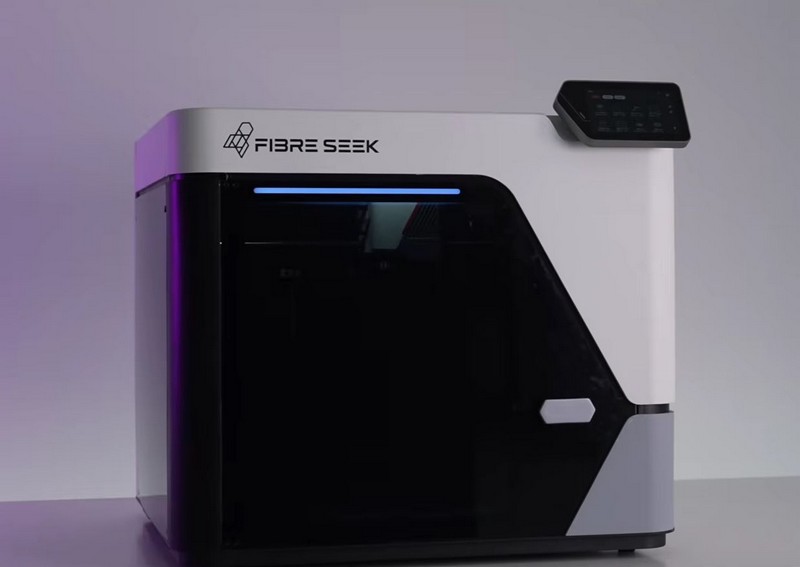
The printer uses a CoreXY design, with the Z-axis on three lead screws and riding on four 8 mm smooth rods, and using 6 mm belts for motion.
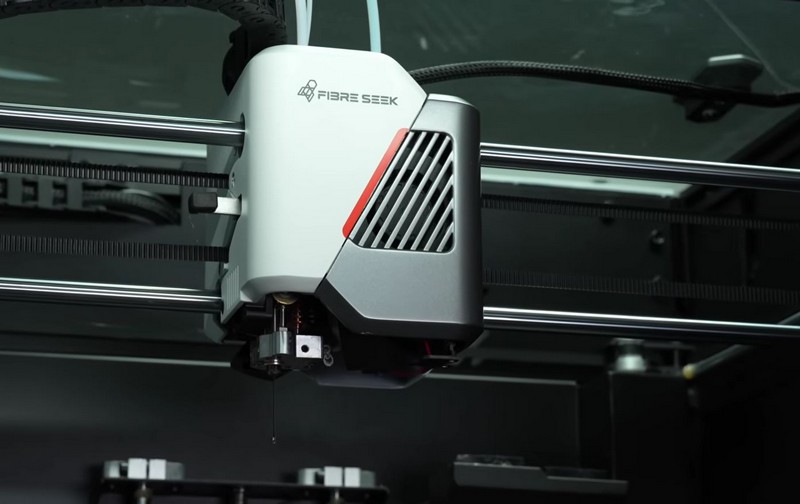
The printer uses an enclosed frame (Plastic and Glass) and has closed-loop control for the part cooling fan, hotend cooling fan, and main control board fan.
The build plate is a Flexible High-Temperature Base, with a maximum heatbed temperature of 110 °C, and Fully Automatic Leveling.
The FibreSeeker 3 has an All Metal hotend with Hardened Steel nozzles. Max FFF nozzle temperature is 350 °C, max CFC nozzle temperature is 350 °C, FFF nozzle diameter is 0.4 mm, CFC nozzle diameter is 0.7 mm, with a built-in Fibre Cutter.
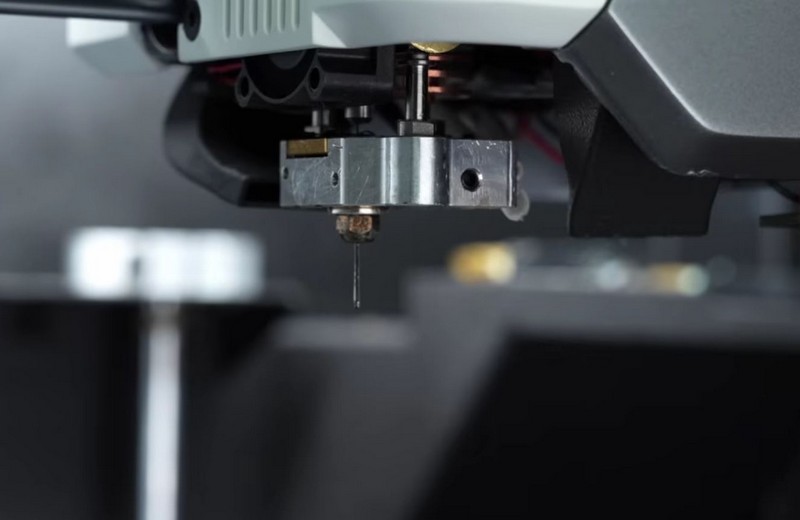
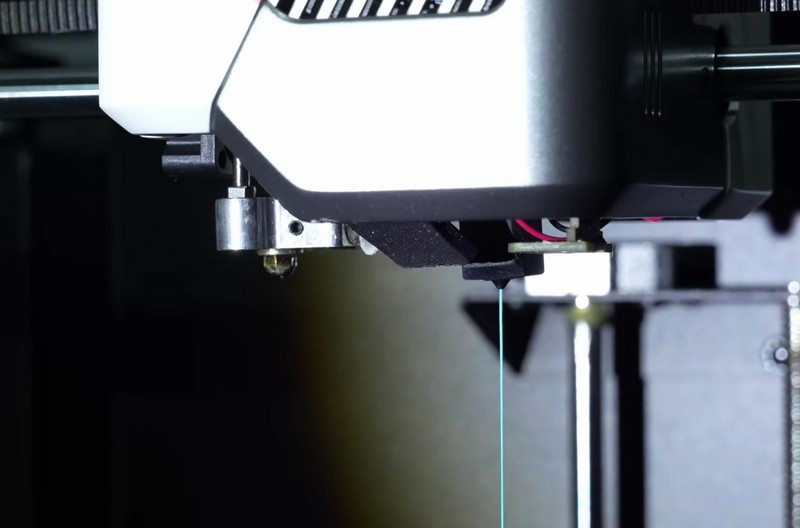
FFF plastic feeds from back hangers and CFC fibre is stored in an embedded chamber. The printer includes dedicated detection for both material streams: Plastic Breakage Sensor, Fiber Breakage Sensor, and Fiber Clogging Sensor.
The FibreSeeker 3 has built-in 32 GB eMMC storage and a USB port, plus a 5-inch touchscreen as the on-printer control screen. Cooling includes a Main Control Board Fan with Closed Loop Control.
Electrical requirements are 100–120 VAC / 200–240 VAC, 50/60 Hz, with a maximum power draw of 1350 W.
The FibreSeeker 3 ships essentially assembled; setup consists of fastening the rear spool holders with four screws, then running the on-printer calibration routine.
In the box (standard package):
| Name | Specific functionality or problem it solves | Price (USD) |
|---|---|---|
| Carbon Fibre Filament 500m | Additional carbon fibre filament supply (500 m). | $100 |
| Remote Training | Video-based remote training session (4 hours). | $750 |
The FibreSeeker 3 requires multiple maintenance procedures to ensure first-layer consistency, extrusion reliability, and long-term performance. These include:
Before each print job (pre-print checks)
Between print jobs (build-surface upkeep)
When extrusion is inconsistent (on-demand nozzle care)
When the hotend needs servicing (on-demand replacement/service)
When the filament path needs servicing (on-demand feed-path service)
When mechanical components need servicing (on-demand mechanical service)
The FibreSeeker 3 includes a 1-year warranty with a one-time free replacement for verified manufacturing defects during the warranty period; issues outside verified manufacturing defects are not covered.
Warranty/service contact: info@fibreseek3d.com. Technical support includes remote diagnostics.
FibreSeek HQ is in Hong Kong, at Central Plaza, 18 Harbour Road, Wan Chai, 65/F, Room 6503.
For self-serve help and updates, FibreSeek maintains official social channels (Facebook, Instagram, YouTube, LinkedIn), and its YouTube channel is @Fibreseek3D with FibreSeeker 3 explainers/demos.
The price of the FibreSeeker 3 is $3,999.00. For this investment, you're buying a dual-process desktop system that combines Composite Fiber Co-extrusion (CFC) with Fused Filament Fabrication (FFF), adds continuous-fibre reinforcement inside printed thermoplastics, in a compact, maker-to-pro continuous-fibre platform with three modes, up to 500 mm/s in FFF, and a 300 × 300 × 245 mm build volume.
Update your browser to view this website correctly. Update my browser now