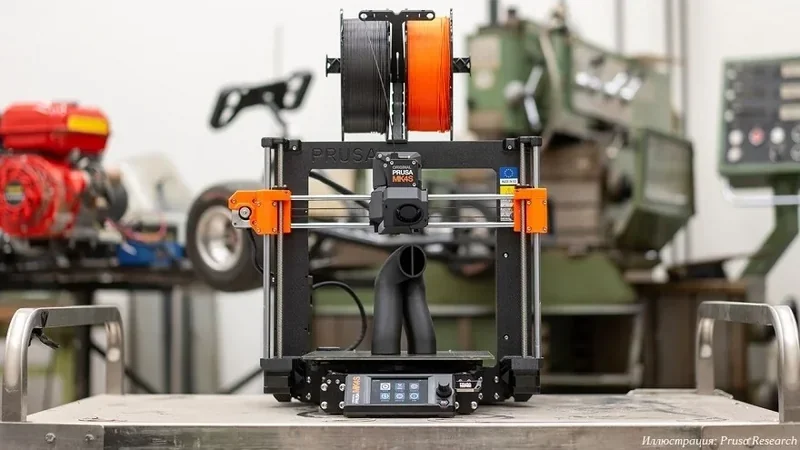
Original Prusa MK4S 3D Printer


- 360° cooling with high-flow nozzle
- Loadcell sensor for perfect first layers
- Input Shaper and Pressure Advance firmware
- Wi-Fi and ethernet connectivity included
- Flexible Payment Terms
- 1 Year Warranty
- Local Technical Support
- Free Online Training
- Smooth PEI Print Sheet
- 1 kg Prusament PLA filament
- USB drive with G-codes
- Tool set
The Original Prusa MK4S builds on the MK4 with faster speeds, greater accuracy, and Prusa’s reliable print quality, featuring innovations like 360° cooling, a high-flow nozzle, and firmware with Input Shaper and Pressure Advance for smooth, complex prints. With a 250×210×220 mm build volume, it supports materials from PLA to carbon-filled filaments, includes a Loadcell sensor for perfect first layers, and connects via Wi-Fi or ethernet. Made in the EU and easy to maintain or upgrade, it suits beginners and professionals in schools, workshops, and small-scale manufacturing.
- What is the print quality and performance of the Original Prusa MK4S 3D Printer?
- Which filaments can you use with the Original Prusa MK4S FDM 3D printer?
- What is the build volume of the Prusa MK4S?
- What is the difference between the Prusa MK4S, Prusa Core One, Bambu Lab A1, Bambu Lab P2S, Bambu Lab P1S, Bambu Lab X1 Carbon?
- What printer controls are available on the Prusa MK4S?
- What connectivity options are available on the Prusa MK4S?
- What software is offered with the Prusa MK4S?
- What is the design and build quality of the Prusa MK4S?
- What comes included in the box with Prusa MK4S?
- What upgrades and accessories are available for the Prusa MK4S?
- How reliable is the Prusa MK4S?
- What maintenance is required for the Prusa MK4S?
- What support and warranty come with the Prusa MK4S Original Prusa 3D Printer?
- How much does the Original Prusa MK4S by Josef Prusa cost?
What is the print quality and performance of the Original Prusa MK4S 3D Printer?
The Original Prusa MK4S delivers exceptional print quality with average dimensional deviations as low as 0.067 mm and maximum deviations of 0.162 mm verified by CT scans, combined with a high-flow nozzle achieving 71% higher flow rates
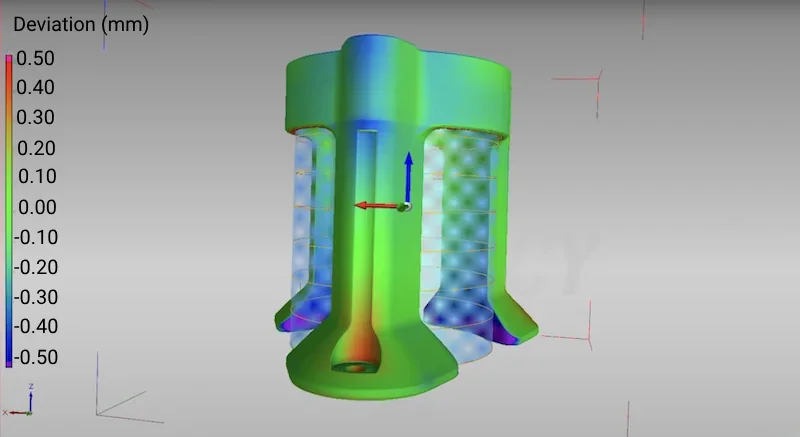
CT scans show the Prusa MK4S leads in accuracy, with an average deviation of 0.067 mm and a maximum of 0.162 mm, outperforming bed-slinger competitors at 0.139–0.141 mm average and 0.355–0.465 mm maximum.
| Prusa MK4S | Competitor 1 | Competitor 2 | |
| Average Deviation | 0.067 mm | 0.139 mm | 0.141 mm |
| Maximum Deviation | 0.162 mm | 0.355 mm | 0.465 mm |
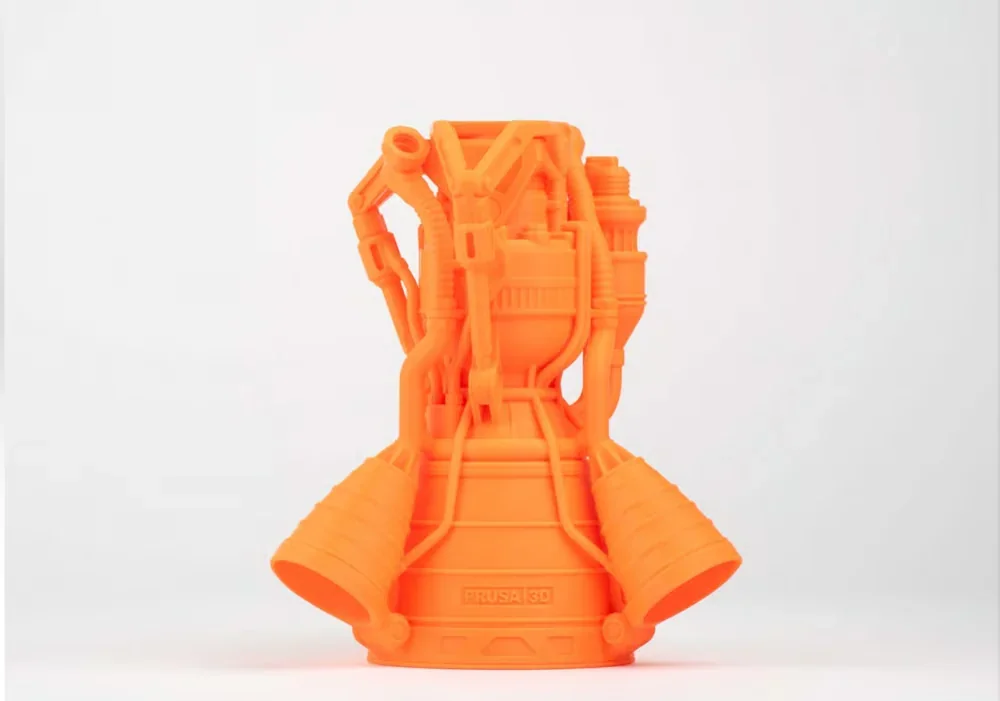
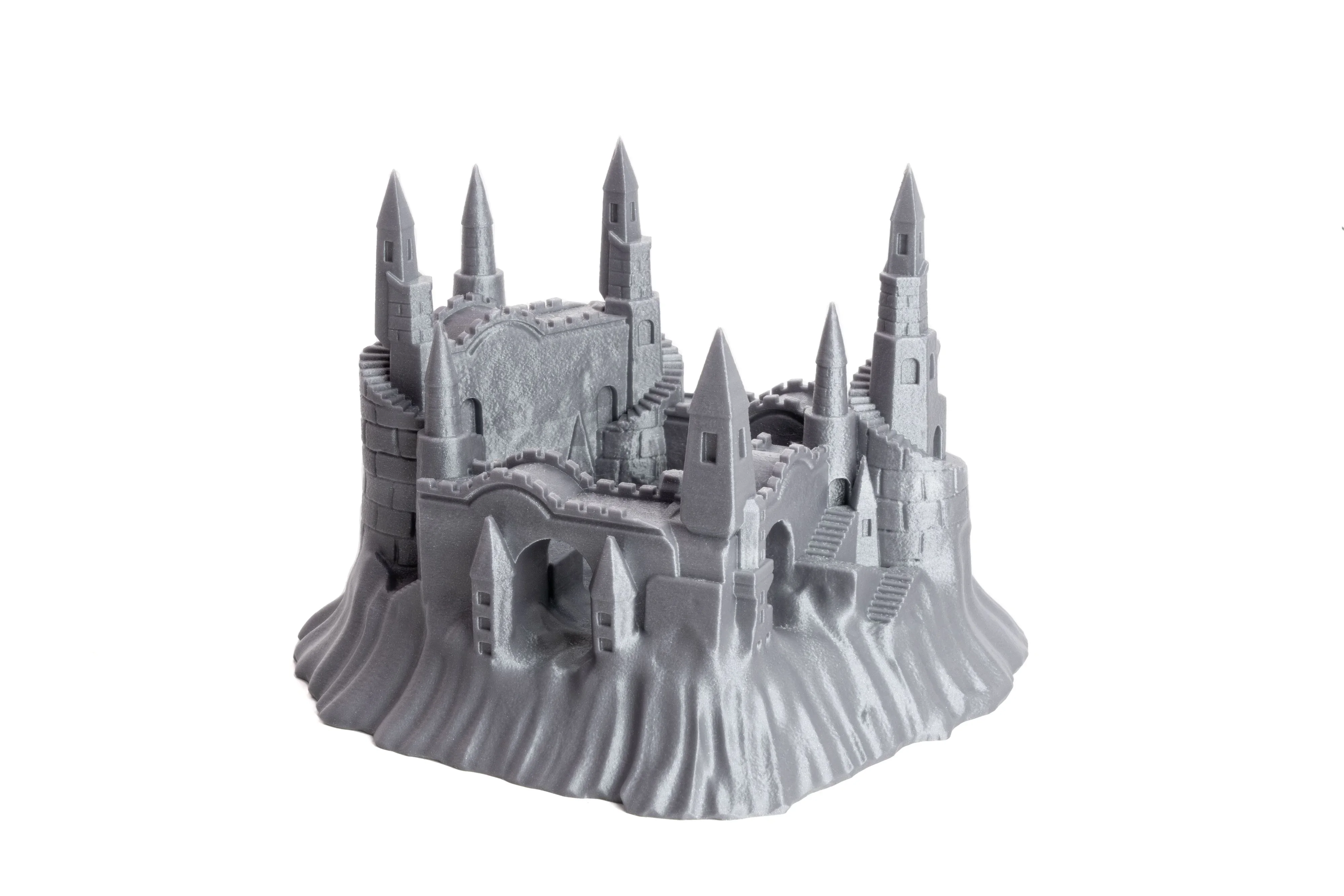
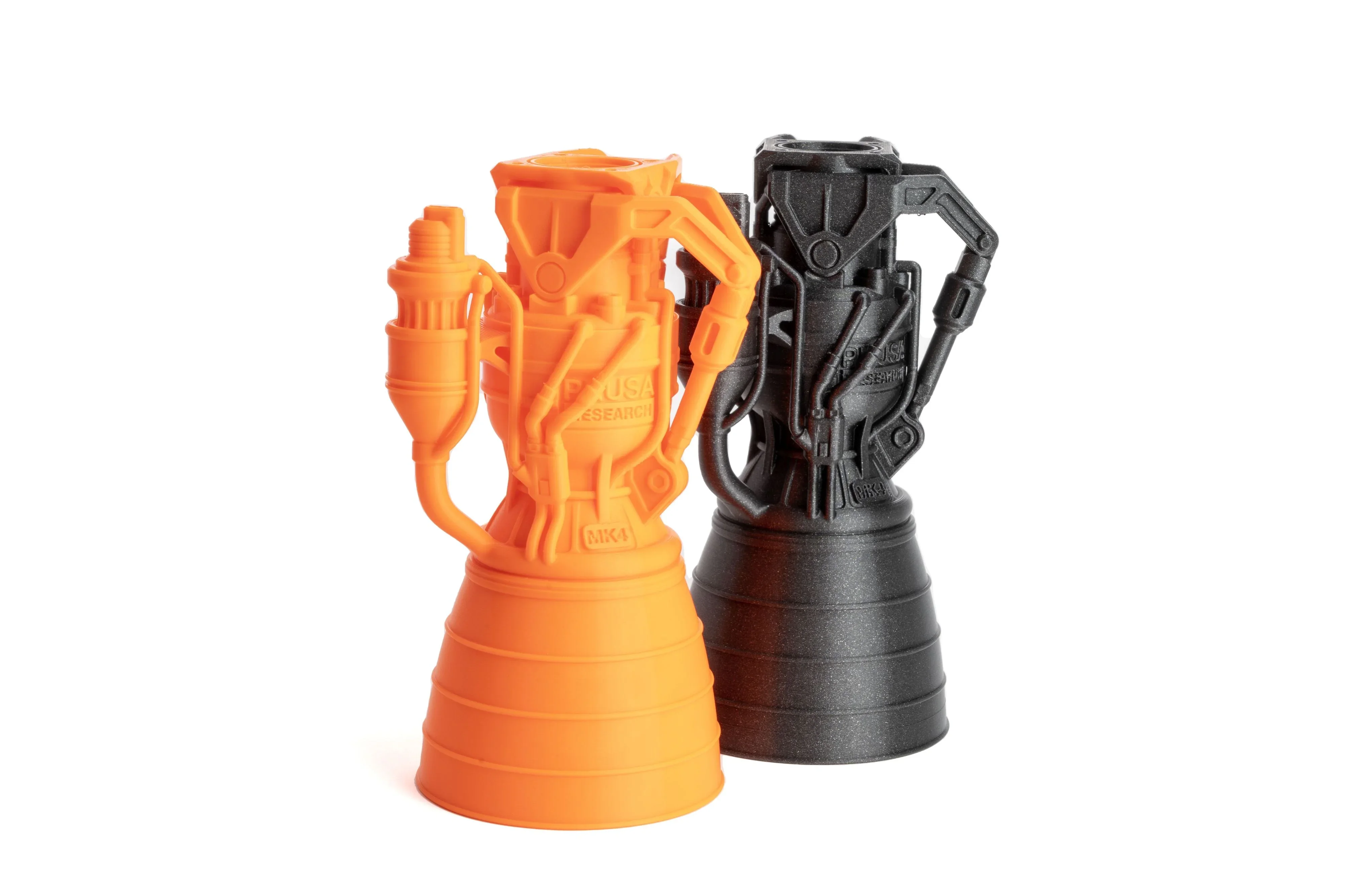
The MK4S’s high-flow nozzle and 360° cooling deliver strong adhesion, smooth finishes, and sharp edges at much higher speeds than earlier models. Its performance earned a 30/30 print quality score from TechRadar and the title of “Best Printer for Quality” from CNET.
The MK4S’s high dimensional accuracy ensures parts fit together perfectly.
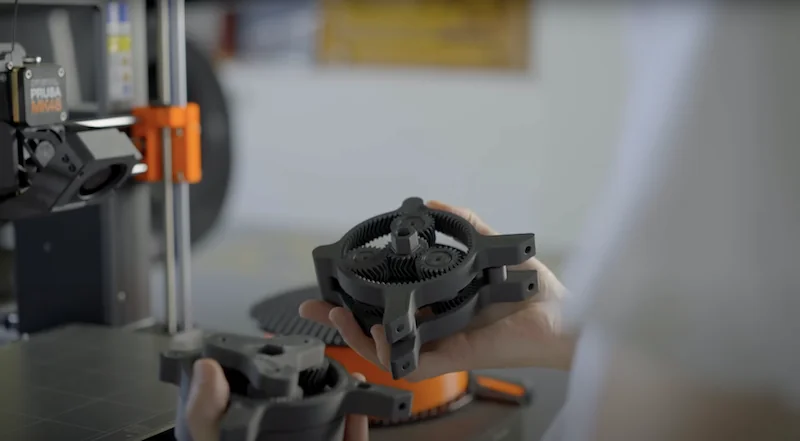
The MK4S uses 0.9° stepper motors, Trinamic 2130 drivers, and a Nextruder direct drive with a 10:1 gearbox to deliver precise filament control and eliminate VFAs.
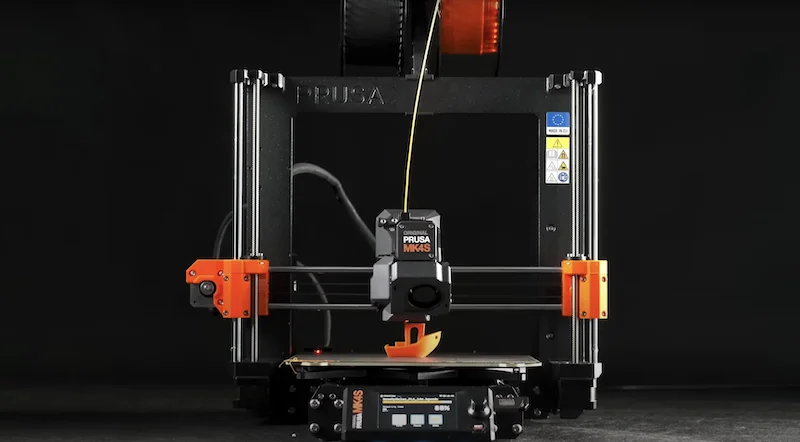
The MK4S supports 0.05–0.30 mm layer heights, delivering excellent quality even at maximum speeds.
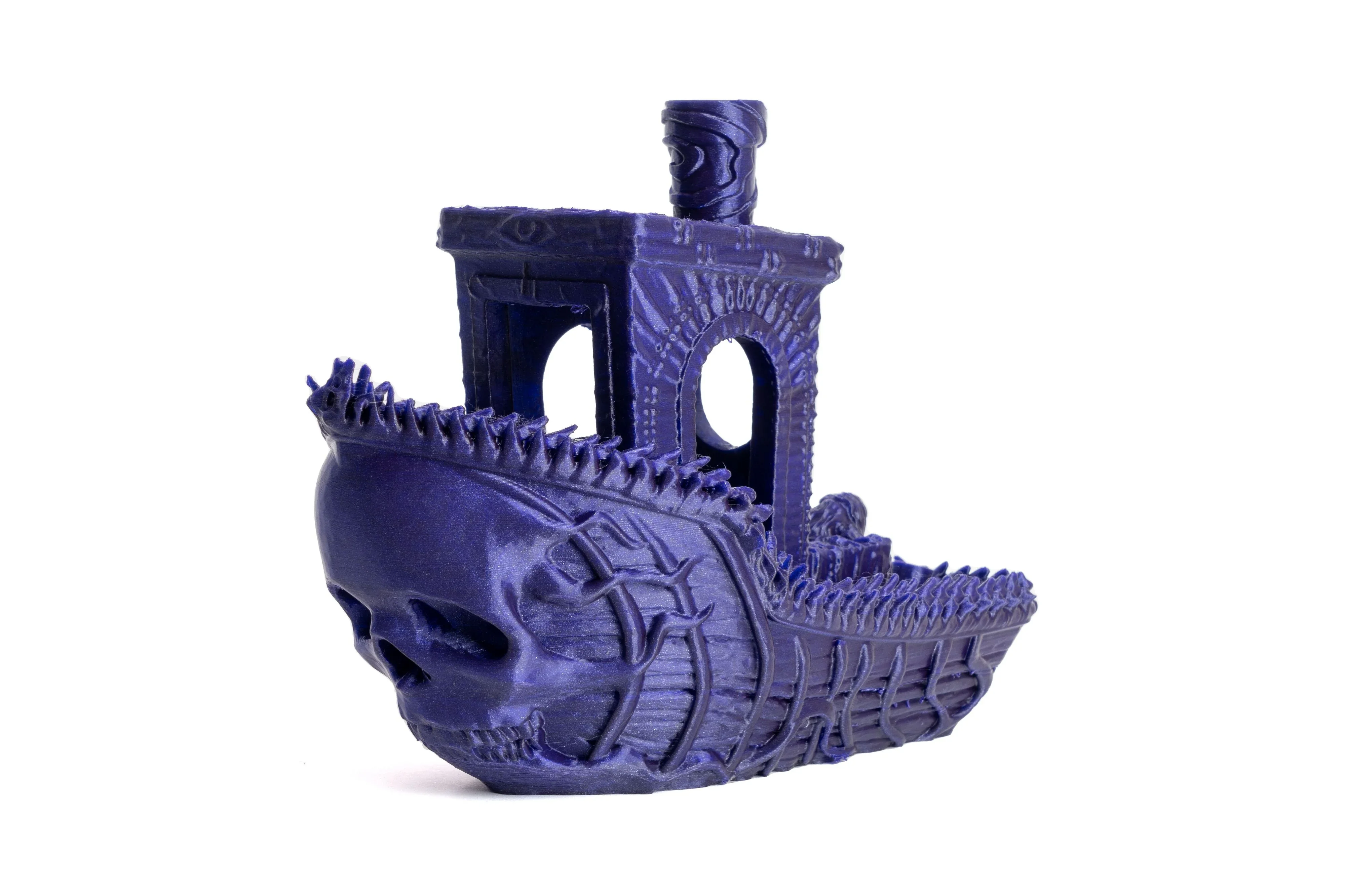
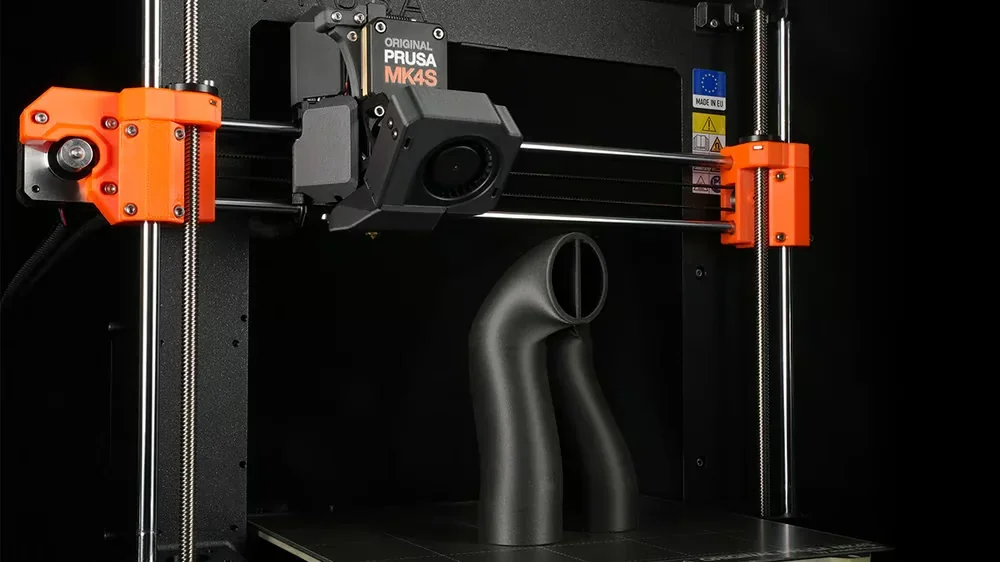
The MK4S’s redesigned 360° cooling system, with a turbine and fan shroud, allows printing overhangs up to 75° without supports, boosting both quality and speed.
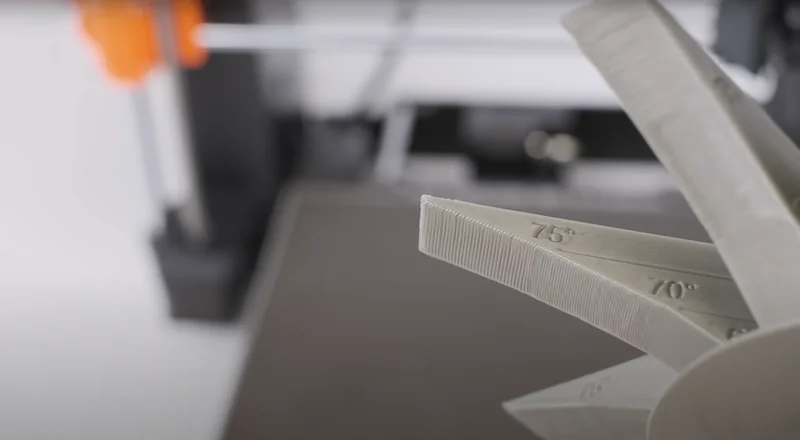
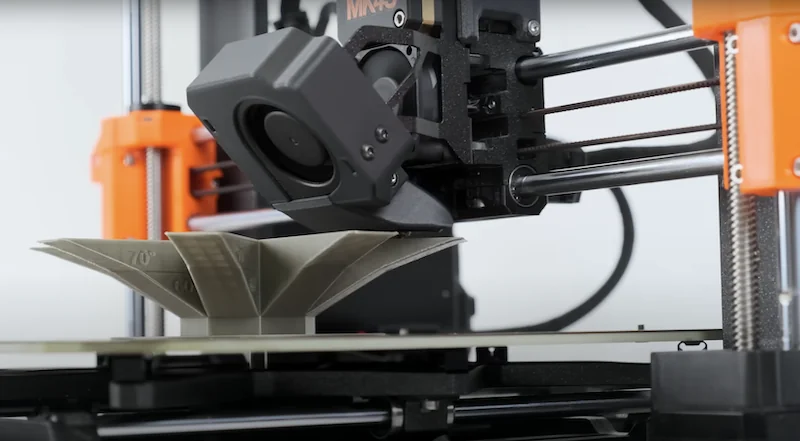
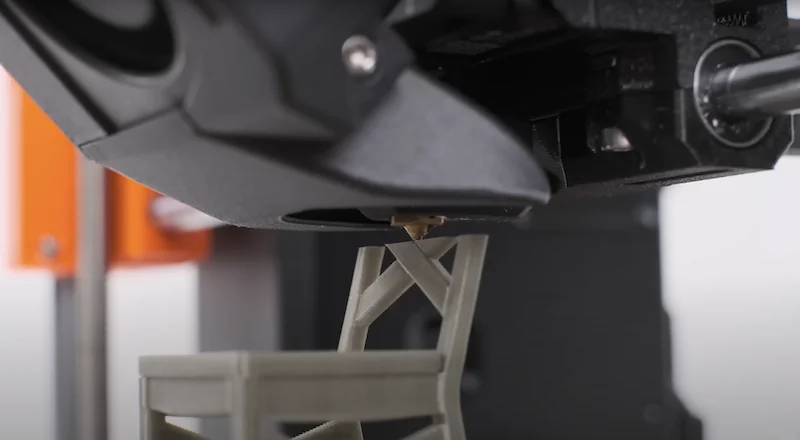
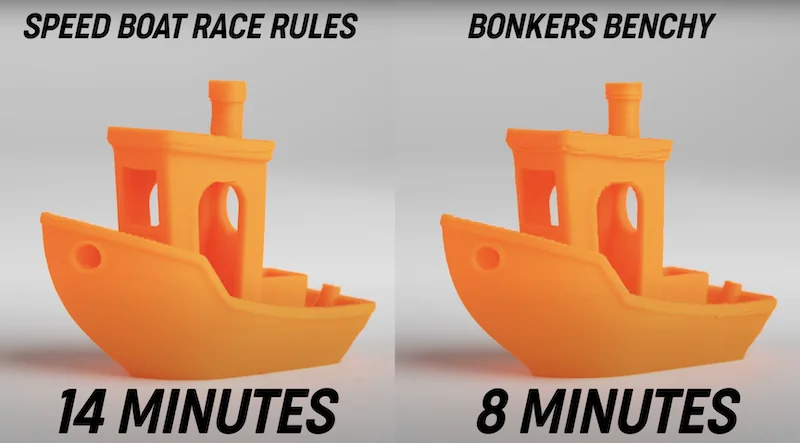
The MK4S’s high-flow nozzle increases melt capacity from 18 to 26 mm³/s, boosting flow rates by 71% with a 0.4 mm nozzle. Paired with improved cooling, it can print a Benchy in 8–10 minutes at excellent quality, rivaling competitors claiming 500–600 mm/s speeds.
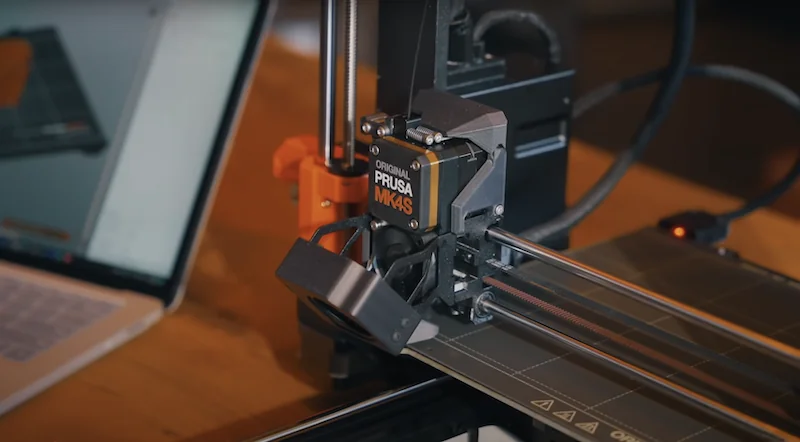
The Loadcell sensor guarantees a perfect first layer on any surface, removing the need for manual leveling. Paired with advanced cooling and extrusion, it produces accurate, strong prints with minimal finishing, even at high speeds.
Which filaments can you use with the Original Prusa MK4S FDM 3D printer?
The MK4S supports 23+ filament types out of the box, from everyday PLA and PETG to engineering materials like PC, PP, ASA, carbon-filled composites, CPE, PVB, and PVA. Its Nextruder direct drive ensures reliable printing with flexibles like TPU through precise extrusion control.
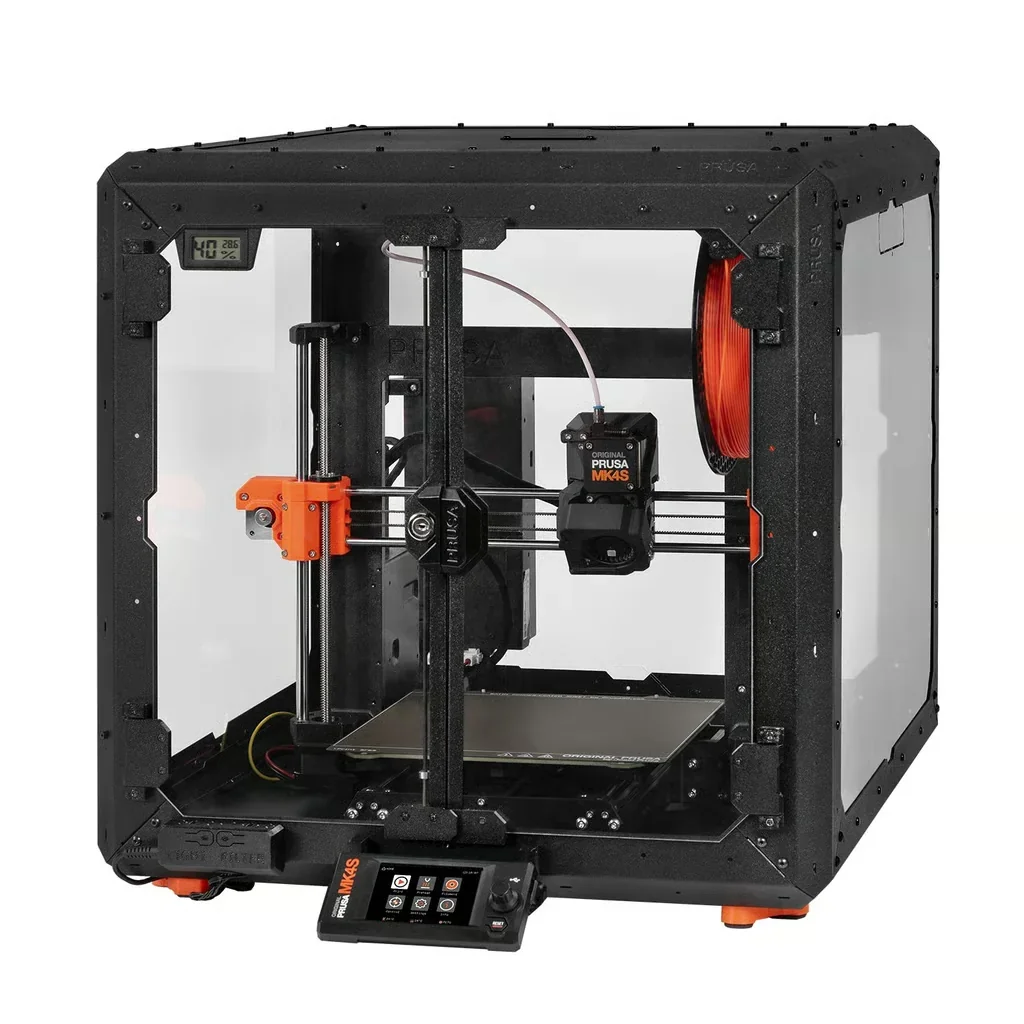
For materials needing higher ambient temperatures like ABS, ASA, PC, and Nylon, the MK4S works best with the optional Prusa Enclosure, which stabilizes the environment, prevents drafts, and ensures strong layer adhesion.
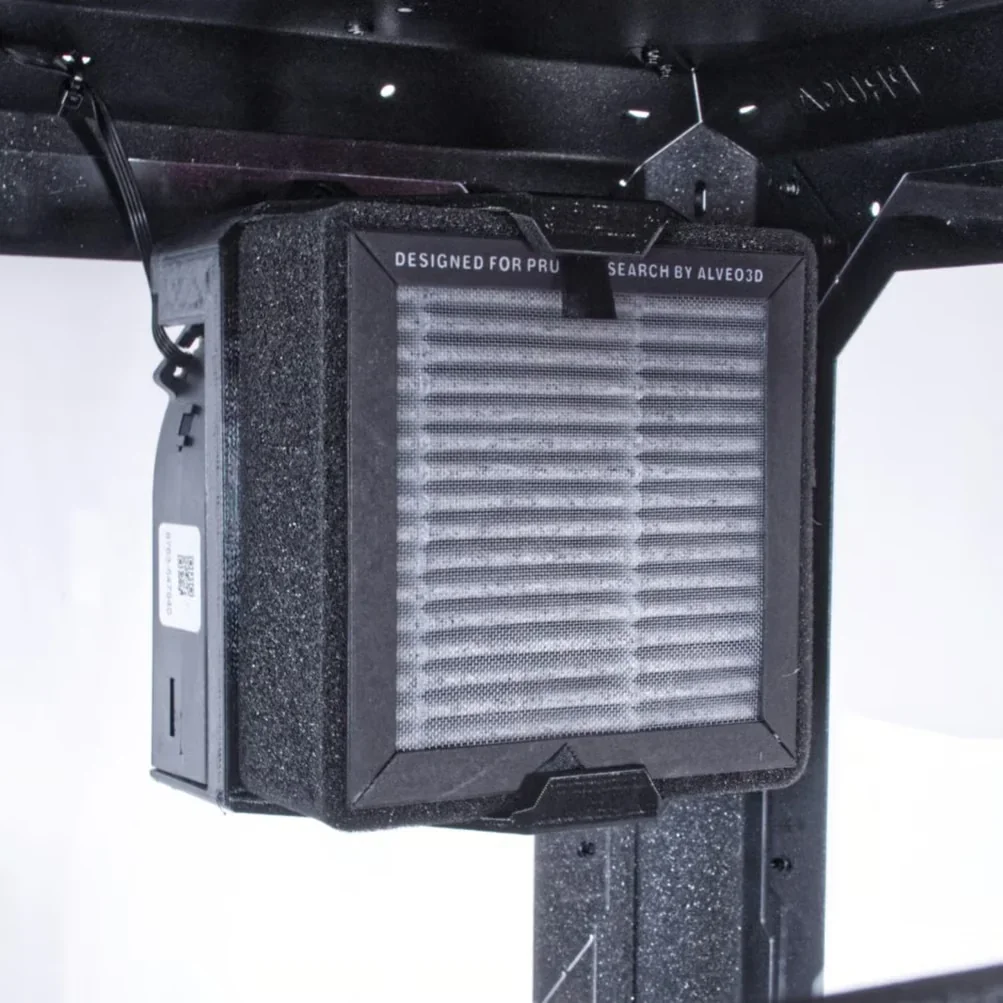
With the optional Advanced Filtration System, the Prusa Enclosure also removes ultra-fine particles, making printing with technical materials safer.
The MK4S reaches 290 °C at the nozzle and 120 °C at the heatbed, covering both standard and advanced materials. Its all-metal hotend prevents heat creep, while the magnetic bed with removable PEI sheets ensures reliable adhesion. It ships with a Smooth PEI sheet, with Textured and Satin options available for specific needs.
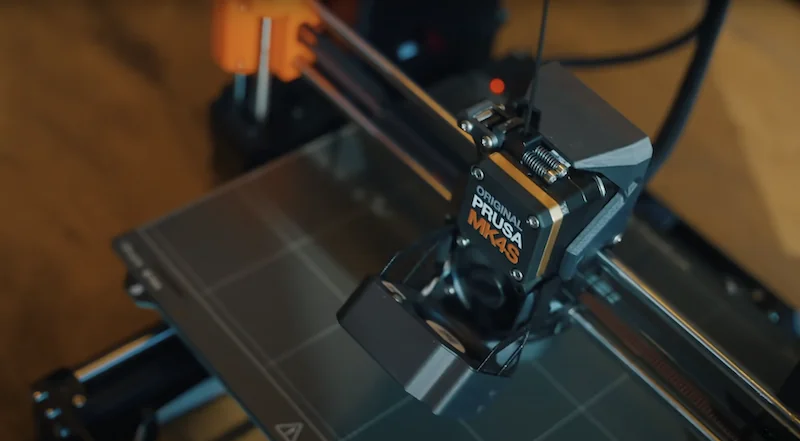
The MK4S follows an open-material approach, supporting Prusament and any 1.75 mm third-party filament. Its PrusaSlicer software includes 180+ tested material profiles for optimized print settings.
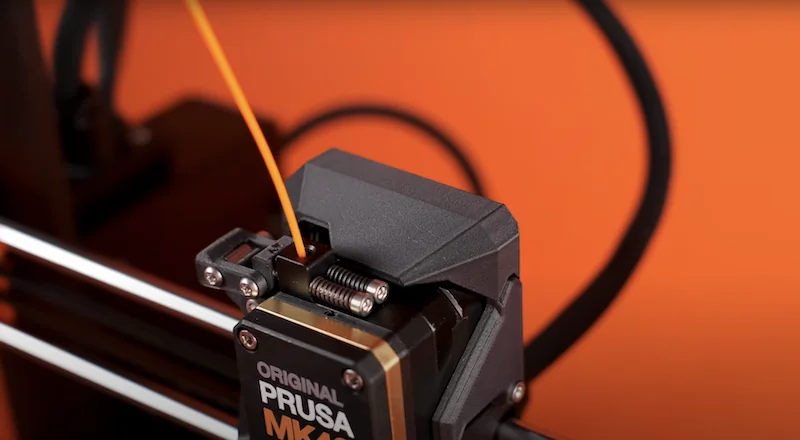
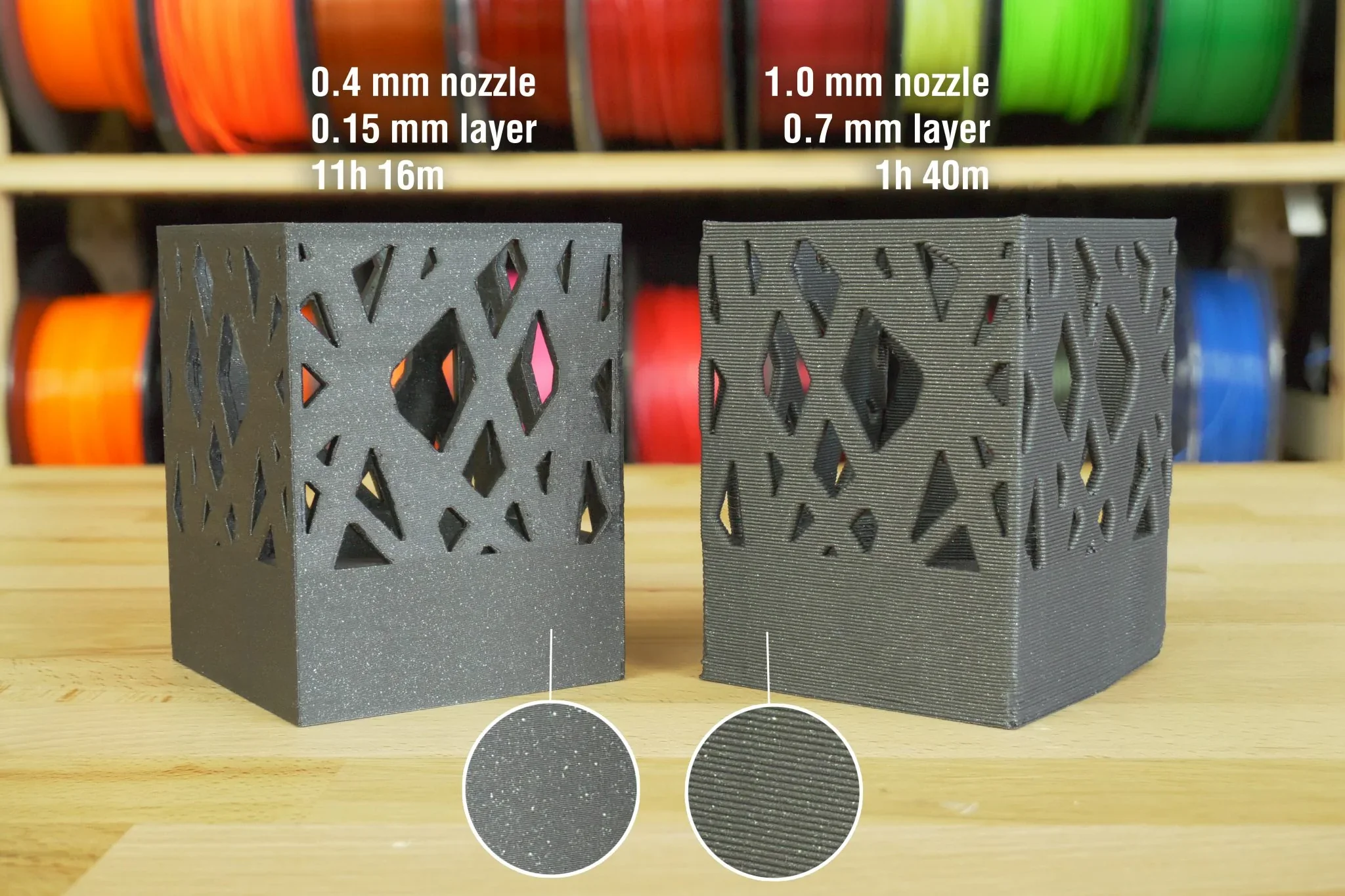
The MK4S’s modular design allows quick, precise nozzle swaps, rivaling CoreXY systems. Users can switch from the included 0.4 mm high-flow nozzle to optional 0.25, 0.6, 0.8, or 1.0 mm nozzles to match material needs and detail levels.
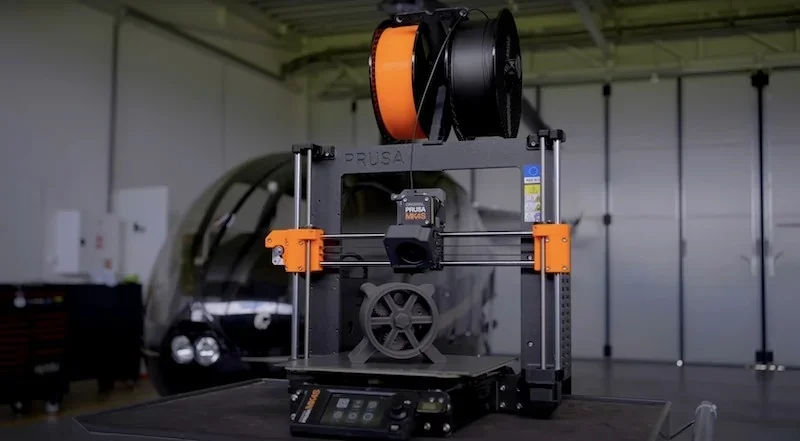
What is the build volume of the Prusa MK4S?
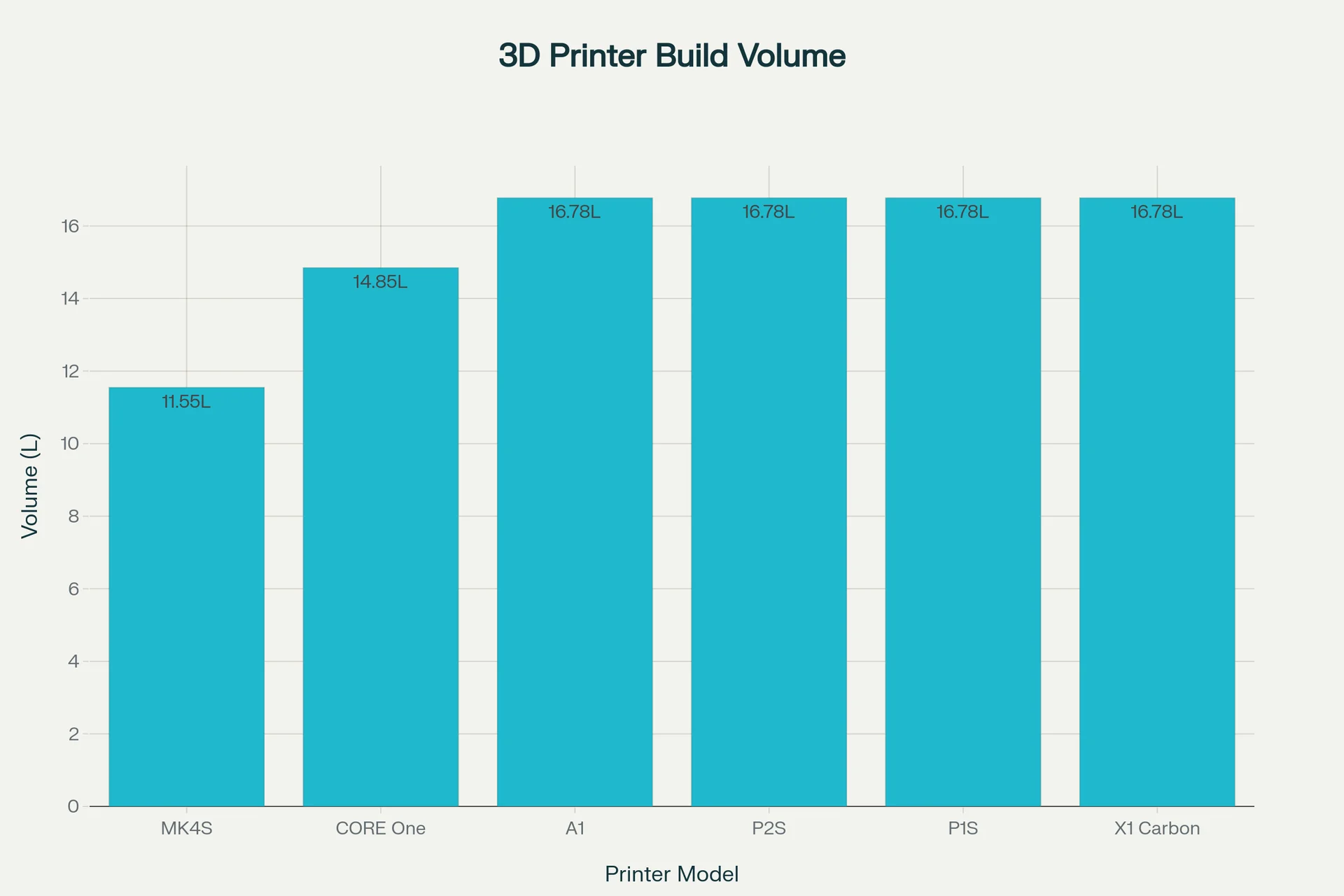
The MK4S offers a 250 × 210 × 220 mm build volume, balancing footprint and capacity. It can handle larger objects like prototypes or assemblies in one piece, with an open-frame design that ensures easy access to the bed and finished prints.
What is the difference between the Prusa MK4S, Prusa Core One, Bambu Lab A1, Bambu Lab P2S, Bambu Lab P1S, Bambu Lab X1 Carbon?
Prusa MK4S — Best for teams that value open-source, upgradable, and repairable hardware with true local control (USB/LAN via Prusa Connect), load-cell first-layer + Mesh ABL for consistent adhesion, broad material support (ABS/ASA/HIPS/PA with the optional enclosure), and efficient operation (290 °C / 120 °C, ~80 W PLA). You can integrate any third-party tools or mods without lock-in, and as Prusa releases new models you can upgrade rather than replace—keeping long-term ownership costs low.
In contrast:
- Prusa CORE One — Wins on enclosed printing with chamber to ~55 °C, taller Z (270 mm), and extra safety/sensing; loses to MK4S on price ($1,199 vs $999), weight/footprint (22.5 kg), and the MK4S’s simpler open-frame setup for PLA/PETG.
- Bambu Lab A1 — Wins on lowest price ($349) and speed headline (500 mm/s) in a compact body; loses on materials (ABS/ASA/PC/PA/CF-GF not recommended), lower bed temp (100 °C), and a closed ecosystem where advanced features require their stack.
- Bambu Lab P2S — Wins on throughput (600 mm/s, 40 mm³/s flow), 256³ mm enclosed cube, and built-in 1080p camera/filters; loses on Ethernet (none), open moddability (closed firmware/feature lock to their ecosystem), and higher PLA steady power (~200 W).
- Bambu Lab P1S — Wins on price/speed ($549, 500 mm/s, 32 mm³/s) inside an enclosure; loses on bed temp (100 °C), feature ceiling (fewer on-machine controls/diagnostics), no Ethernet, and the closed ecosystem limitations.
- Bambu Lab X1 Carbon — Wins on automation (Micro Lidar first-layer, rich sensing) and fast workflows (500 mm/s, 32 mm³/s) in a 256³ mm enclosure; loses on openness (closed firmware; limited third-party feature parity), no Ethernet, and it can’t match MK4S’s upgrade-kit path and field-serviceability.
| Specification | Prusa MK4S | Prusa CORE One | Bambu Lab A1 | Bambu Lab P2S | Bambu Lab P1S | Bambu Lab X1 Carbon |
|---|---|---|---|---|---|---|
| Price (USD), from | 999 | 1199 | 349 | 799 | 549 | 799 |
| Build Volume (W×D×H) | 250×210×220 mm | 250×220×270 mm | 256×256×256 mm | 256×256×256 mm | 256×256×256 mm | 256×256×256 mm |
| Enclosure / Chamber | Open (enclosure optional) | Enclosed; up to 55 °C | Open (no enclosure) | Enclosed (passive) | Enclosed (passive) | Enclosed; regulated airflow |
| Max Nozzle / Bed | 290 °C / 120 °C | 290 °C / 120 °C | 300 °C / 100 °C | 300 °C / 110 °C | 300 °C / 100 °C | 300 °C / 110–120 °C |
| Max Flow | 30 mm³/s | 34-40 mm³/s | 28 mm³/s | 40 mm³/s | 32 mm³/s | 32 mm³/s |
| First Layer / Leveling | Load-cell first layer; Mesh ABL | Auto first layer (load cell); Mesh ABL | Automated | Automated | Automated | Automated |
| Materials | PLA, PETG, Flex, PVA, PC, PP, CPE, PVB; ABS/ASA/HIPS/PA with enclosure | PLA, PETG, Flex, PVA, PC, PP, CPE, PVB; ABS/ASA/HIPS/PA with Advanced Filtration | PLA/PETG/TPU/PVA ideal; ABS/ASA/PC/PA/CF-GF not recommended | Broad incl. PLA/PETG/ABS/ASA/TPU/PA/PC/PVA + CF/GF variants | PLA/PETG/TPU/ABS/ASA/PET; PA/PC ideal | PLA/PETG/TPU/ABS/ASA; PA/PC/CF-GF ideal |
| Filtration | Can be installed as an optional add-on | Can be installed as an optional add-on | N/A | Activated carbon (VOC/PM) | Activated carbon | Activated carbon |
| Connectivity / Control | USB, LAN (Prusa Connect); optional Wi-Fi | Ethernet, Wi-Fi module, USB | Wi-Fi | Dual-band Wi-Fi, USB | Wi-Fi/Bluetooth | Wi-Fi |
| Dimensions (W×D×H) | 500×550×400 mm | 415×444×555 mm | 465×410×430 mm | 392×406×478 mm | 389×389×458 mm | 389×389×457 mm |
| Net Weight | 7 kg | 22.5 kg | 8.3 kg | 14.9 kg | 12.95 kg | 14.13 kg |
Bottom-Line:
- Buy the Prusa MK4S, if you prioritize open firmware, third-party integration, upgradeability, and repairability —with consistent first layers and mature LAN control.
- Step up to Prusa CORE One for a hotter chamber and taller Z inside the Prusa ecosystem.
- Buy the Bambu Lab P2S/X1C, if maximum automation and raw speed outweigh openness/Ethernet,
- Buy the Bambu Lab P1S or A1 strictly for budget throughput — accepting their ecosystem and material limits.
What printer controls are available on the Prusa MK4S?
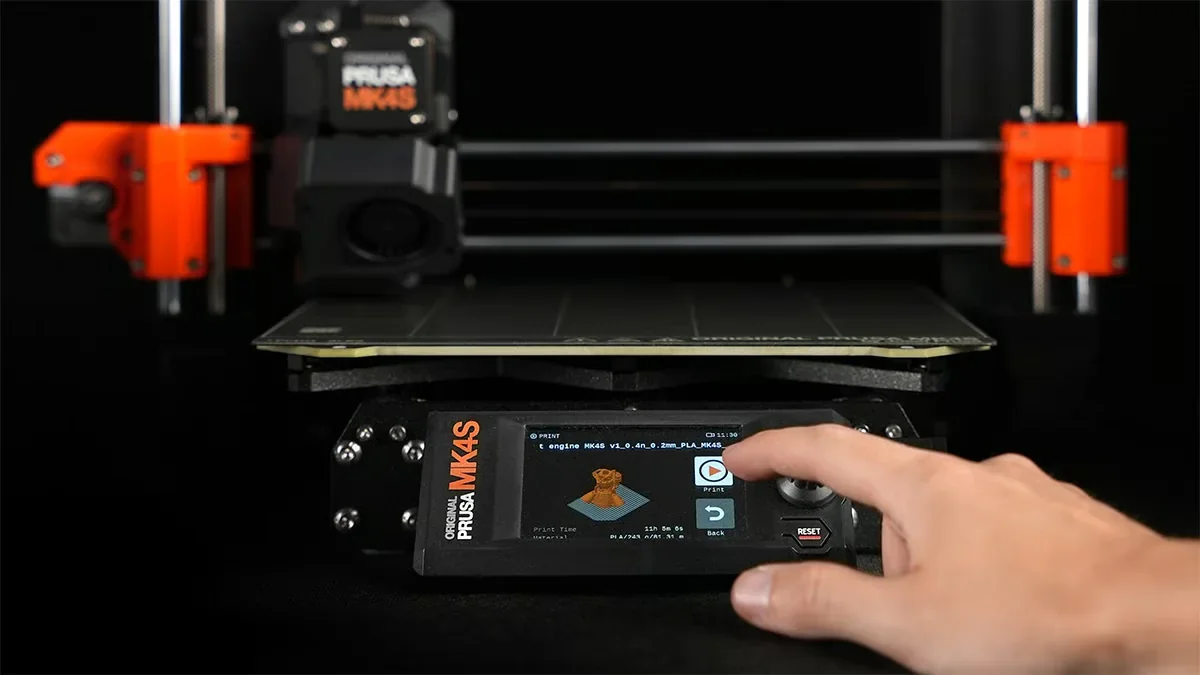
The MK4S uses a 3.5-inch color touchscreen as its main interface, offering intuitive controls for beginners and pros. From the menu, users can manage print jobs, load or unload filament, and run calibration routines including Z-axis alignment, Mesh Bed Leveling, loadcell testing, and automatic first-layer calibration.
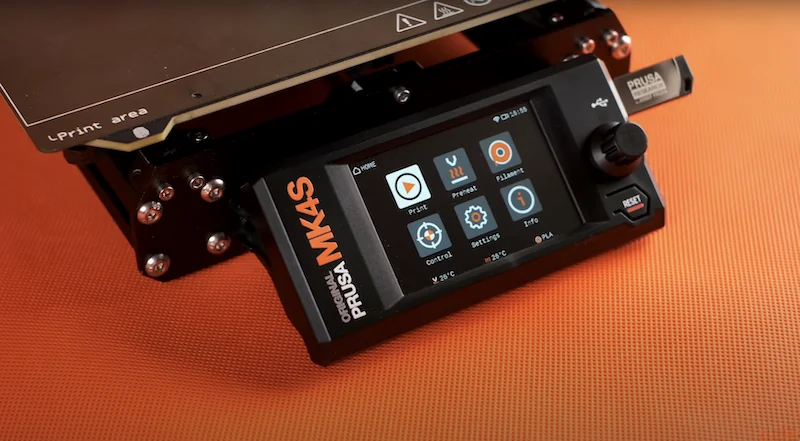
The MK4S control system includes diagnostics for fans, motion axes, heaters, and automatic loadcell calibration. An RGB status bar gives at-a-glance feedback, while the display shows real-time data such as layer number, time remaining, temperatures, and print progress.
What connectivity options are available on the Prusa MK4S?
The MK4S supports USB, Ethernet, and Wi-Fi with NFC setup. Users can print from USB drives, connect via wired networks, or configure Wi-Fi quickly with a smartphone tap.
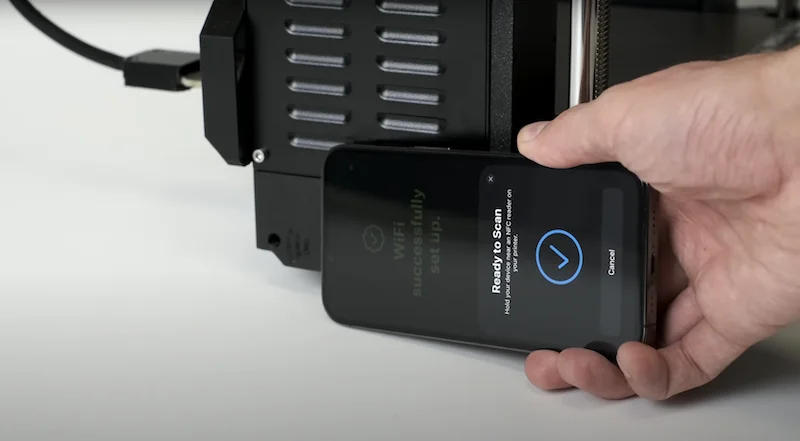
For high-security environments, the MK4S’s Wi-Fi module can be physically removed to ensure full network isolation.
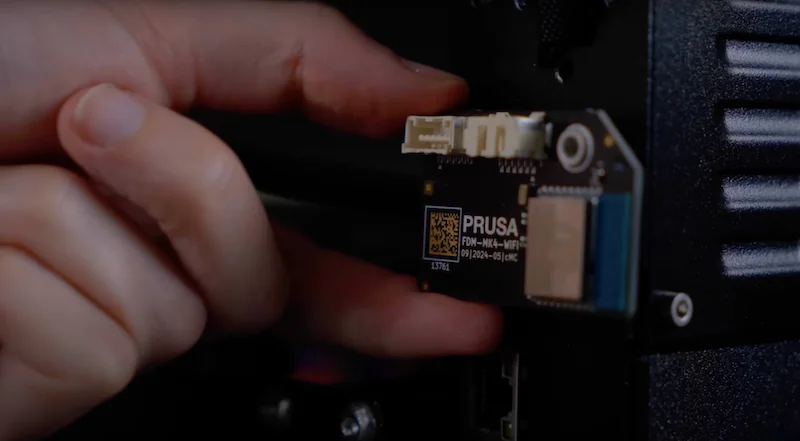
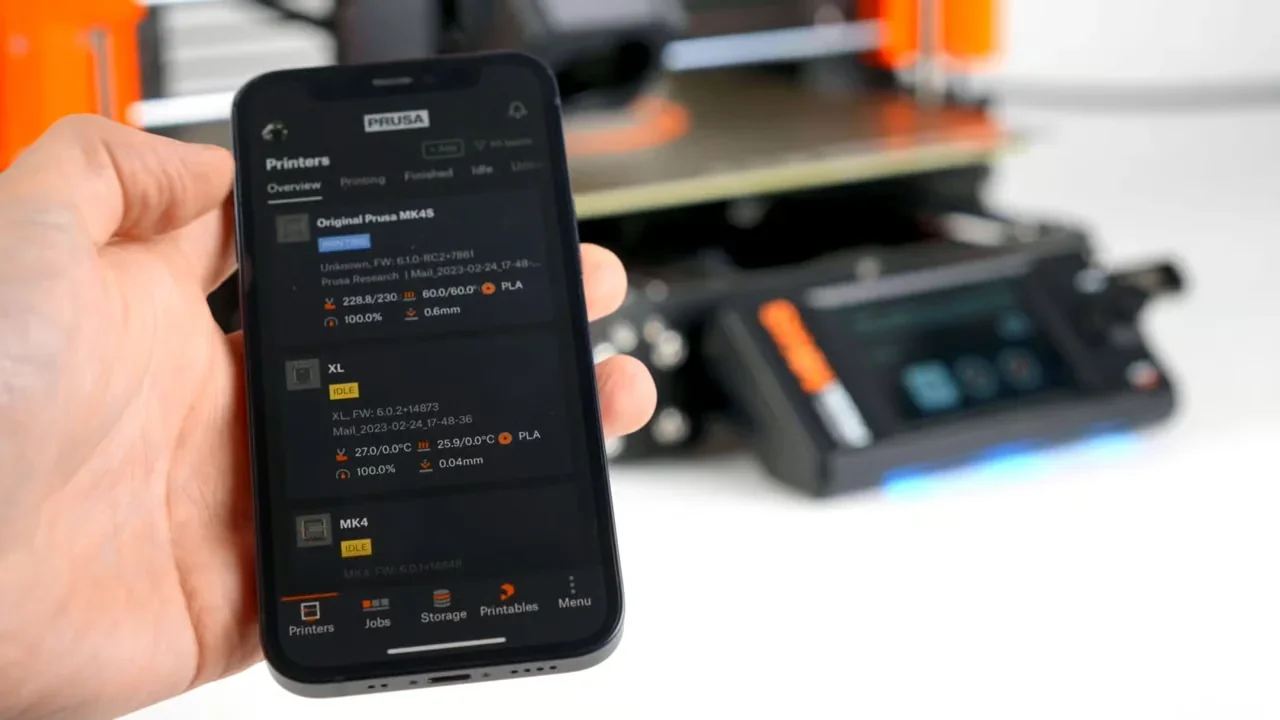
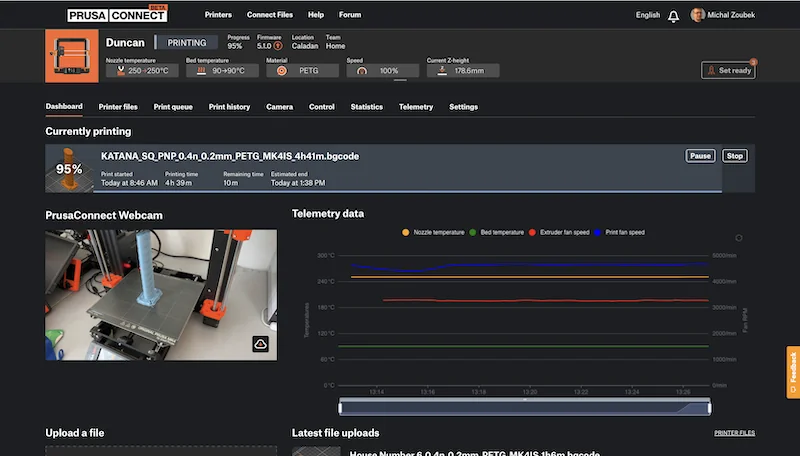
The MK4S integrates with Prusa Connect for remote monitoring and control via web or mobile app, enabling print management from anywhere. It also runs fully offline by default, sharing data only when users opt in. All connectivity features are backed by open-source firmware for transparency and security.
What software is offered with the Prusa MK4S?
The MK4S includes PrusaSlicer, an open-source slicer with 180+ tested material profiles and features like variable layer height, organic supports, and multi-material settings for the optional MMU3. Both the slicer and printer firmware receive regular updates, with the latest (v6.2.4, April 2025) adding Input Shaper and Pressure Advance for enhanced quality.
The MK4S works with Prusa Connect for remote control and multi-printer management via web or mobile app. It also links to Printables.com, Prusa’s library of free, optimized 3D models. All software is privacy-focused, with full offline functionality and data sharing only by user choice.
What is the design and build quality of the Prusa MK4S?
The Prusa MK4S features a rigid aluminum extrusion frame weighing 7 kg with a compact 500 × 550 × 400 mm footprint, durable all-metal components including a one-piece nozzle assembly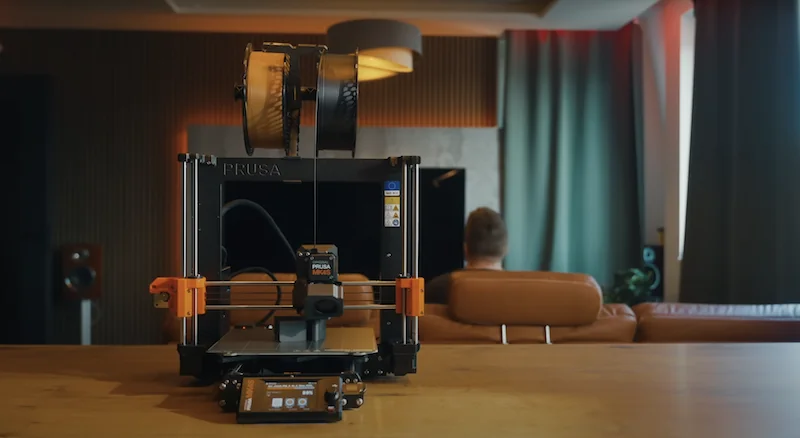
The MK4S is built for durability and easy service, with no welded or glued parts and full disassembly possible using Allen keys. Its Nextruder has an aluminum heatsink and all-metal hotend path for reliable high-temperature printing.
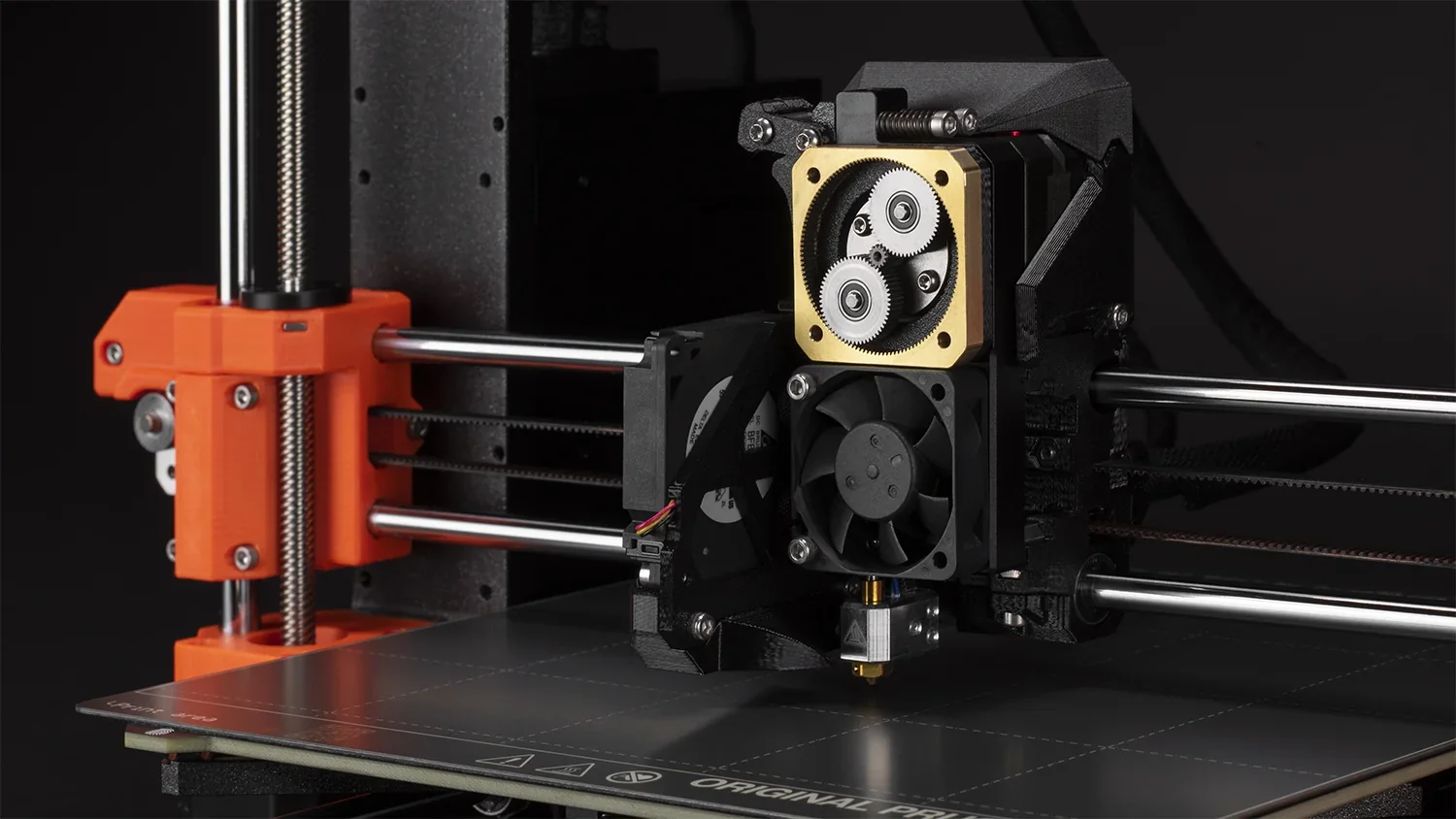
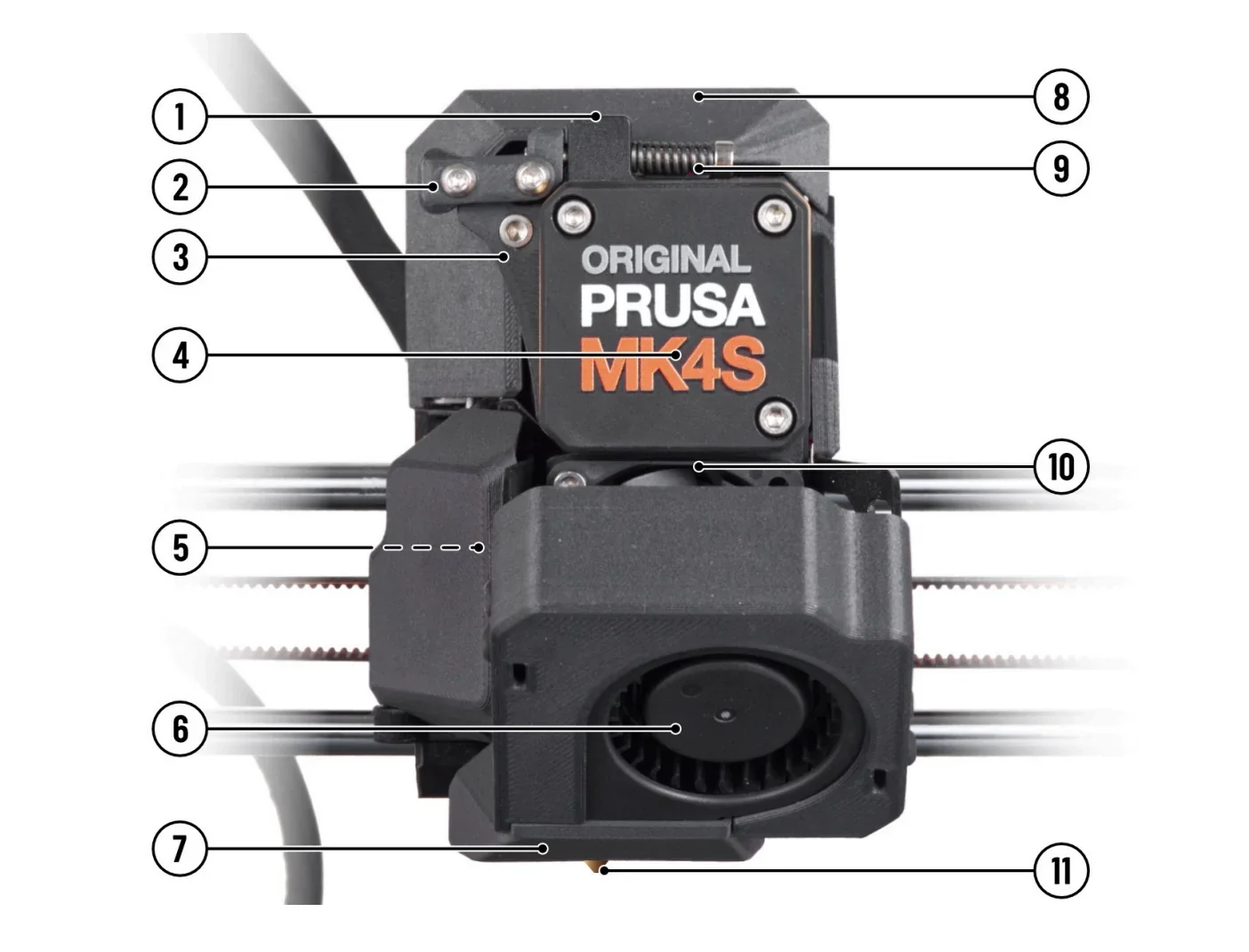
Full List of Nextruder Components:
- Filament insertion point – accepts 1.75 mm filament.
- Idler lock (swivel) – flips up to unlock the idler door.
- Idler – applies pressure on the filament as it’s driven forward.
- Planetary gearbox and extruder motor – ensure precise filament feeding.
- Thumbscrew cover – opens to access thumbscrews for quick nozzle changes.
- Print fan – high-performance turbine for cooling prints.
- Fan shroud – directs airflow onto the printed object.
- Electronics cover – protects the breakout board.
- Idler screws – adjust filament pressure.
- Heatsink fan – cools the aluminum heatsink.
- Nozzle – ships with a default 0.4 mm nozzle.
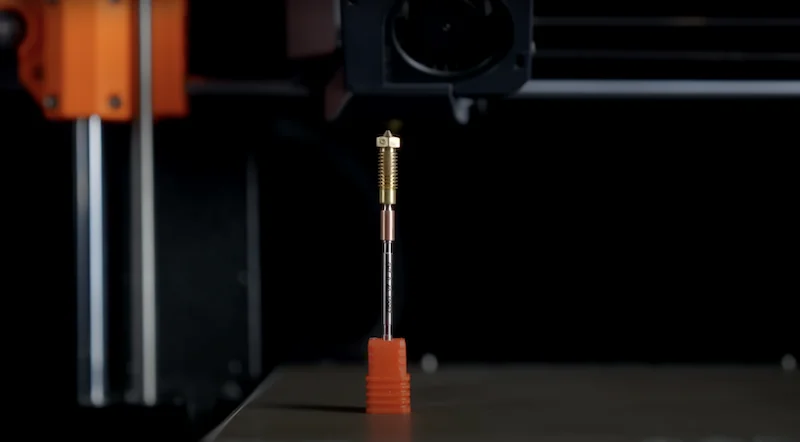
Note: The MK4S uses a one-piece nozzle assembly instead of a tip, preventing heatbreak gaps and oozing while protecting the heater and thermistor during changes — fixing a common issue on the MK3.
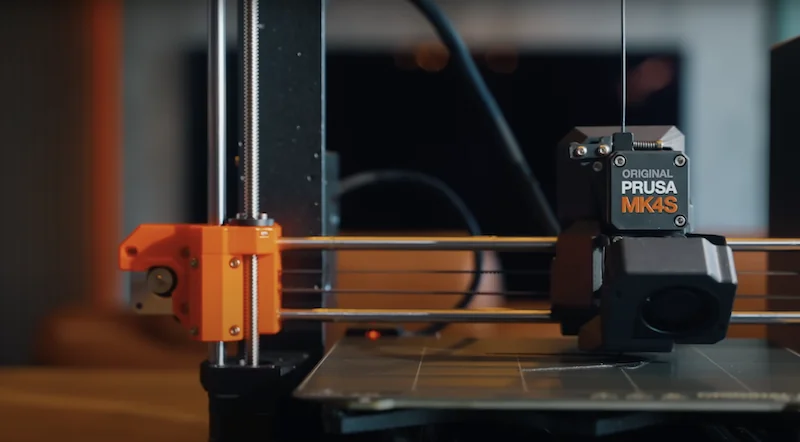
The MK4S motion system uses 0.9° stepper motors with Trinamic 2130 drivers to eliminate VFAs, while smooth rods and linear bearings ensure consistent movement.
The MK4S uses a custom 240 W Delta power supply with Power Panic hardware to recover from outages.
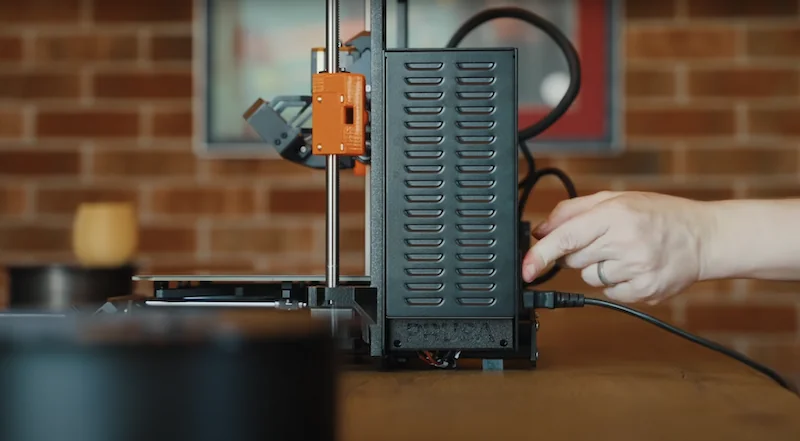
The MK4S is built in Prusa’s Prague facility with strict EU quality control, resulting in a warranty claim rate under 1%. Its construction combines machined metal, injection-molded parts, and Prusament PC Blend Carbon Fiber components for strength and heat resistance.
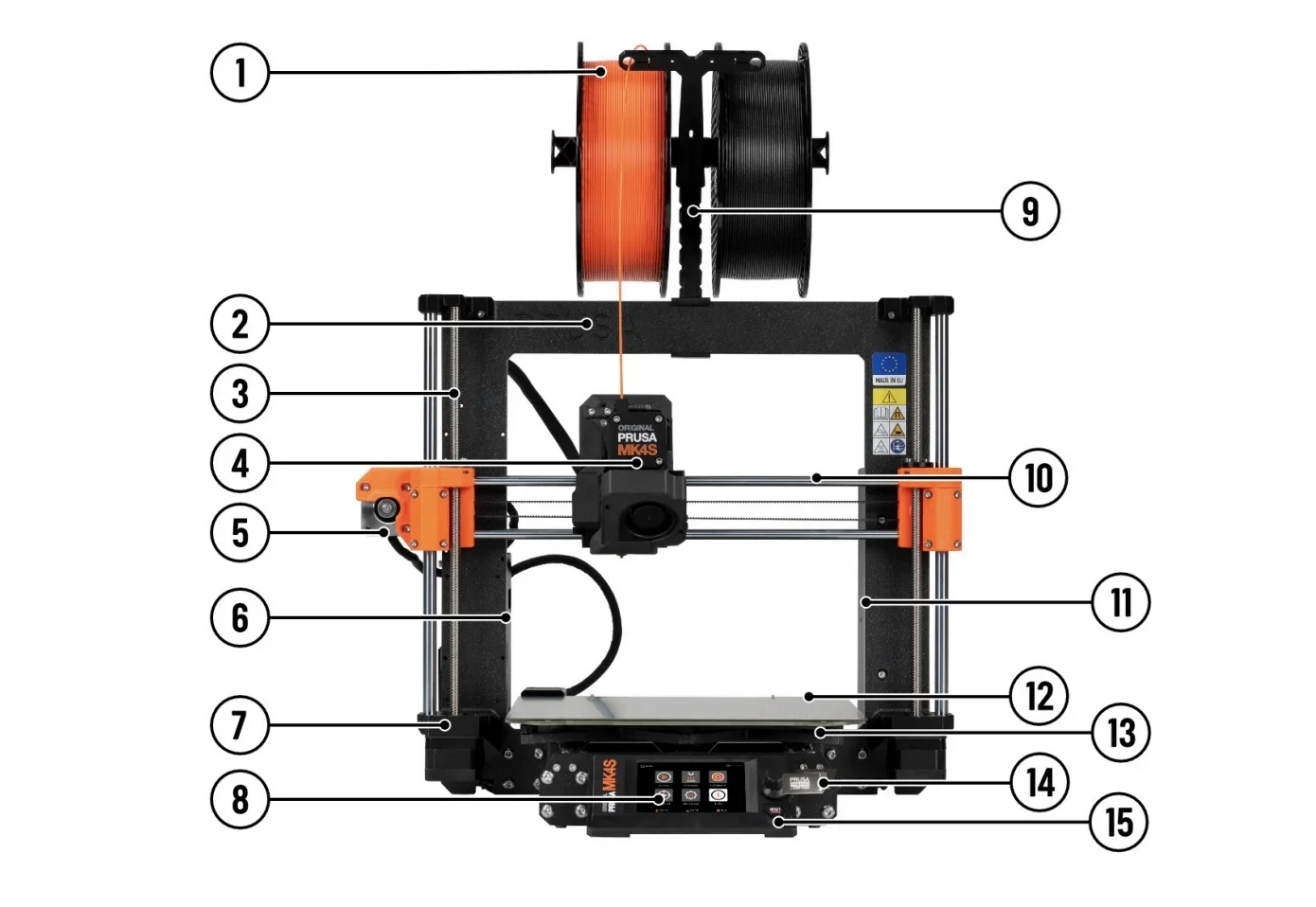
Full List of Components:
- Filament spool – holds printing material.
- Spool holder – supports the filament spool.
- Frame – rigid aluminum structure.
- Z-axis – threaded and smooth rods, moved by two stepper motors, raise and lower the Nextruder.
- X-axis – horizontal assembly with rods, motor, belt, and plastic parts that guide the Nextruder left to right.
- X-axis stepper motor – drives the Nextruder’s horizontal motion.
- Nextruder – direct-drive extruder for precise filament control.
- Electronics box – houses the xBuddy board, with Ethernet and Wi-Fi ports at the rear.
- LCD screen – touchscreen interface for control and configuration.
- Rotary knob & reset button – secondary control inputs.
- Power Supply Unit – custom 240 W Delta PSU with Power Panic.
- Heatbed (MK52) – proven design with embedded magnets for removable sheets.
- Print sheet – magnetic PEI sheet for adhesion and easy part removal.
- USB port & drive – used for G-code printing and firmware updates.
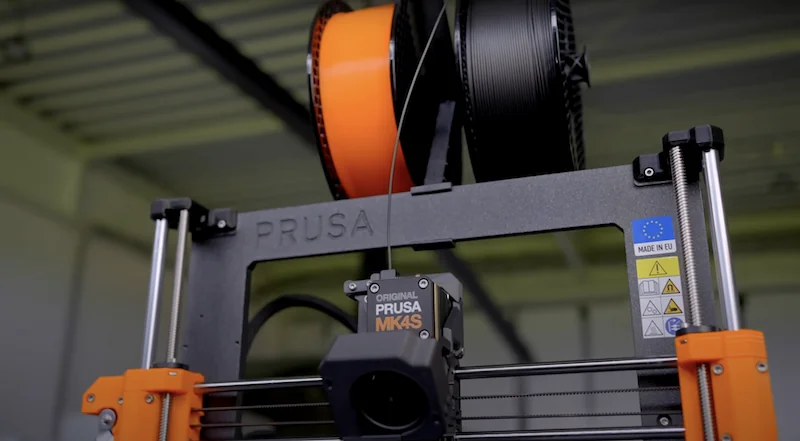
The MK4S’s integrated spool holder minimizes friction for smoother filament feeding.
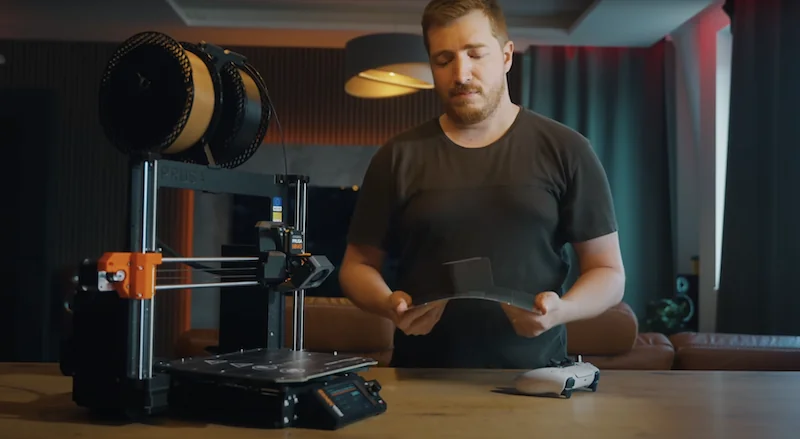
The MK4S’s magnetic heatbed with removable spring steel sheets makes print removal and surface maintenance easy.
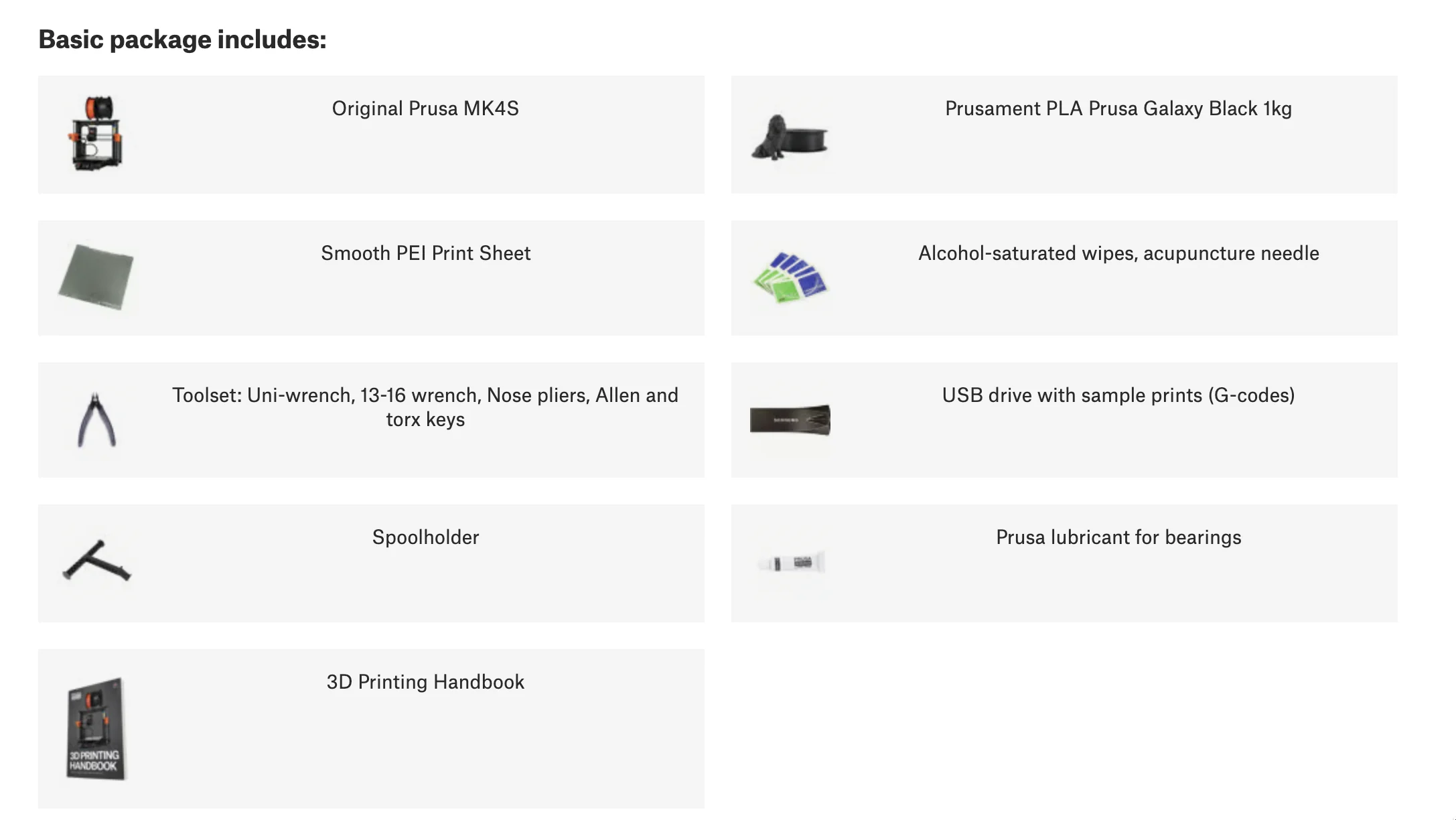
What comes included in the box with Prusa MK4S?
- Original Prusa MK4S 3D printer (assembled or kit)
- Smooth PEI Print Sheet
- 1 kg spool of Prusament PLA (Galaxy Black)
- USB drive with sample G-codes
- Spool holder
- Prusa bearing lubricant
- Alcohol wipes
- Acupuncture needle for nozzle cleaning
- Tool set (Uni-wrench, 13–16 wrench, pliers, Allen & Torx keys)
- Power cable (US or EU)
- 3D Printing Handbook
- Warranty note
The MK4S ships ready to print, with a full spool of Prusament PLA Galaxy Black, a pre-installed Smooth PEI sheet, and a USB drive with sample files. A tool set supports assembly and maintenance, while the 3D Printing Handbook provides setup, calibration, and troubleshooting guidance.
Note: Package contents may change without notice. Confirm current items with a Top3DShop sales representative before ordering.
What upgrades and accessories are available for the Prusa MK4S?
Prusa3D offers more than 30 accessories and upgrades for the Prusa MK4S.
3D Printer Multi-Material & Enclosure Upgrades
| Accessory | Function | Price (USD) | Image |
| Enclosure | Printer enclosure that surrounds the printer to reduce drafts and dust exposure, help stabilize the printing environment, and improve safety in shared spaces. | $471 | 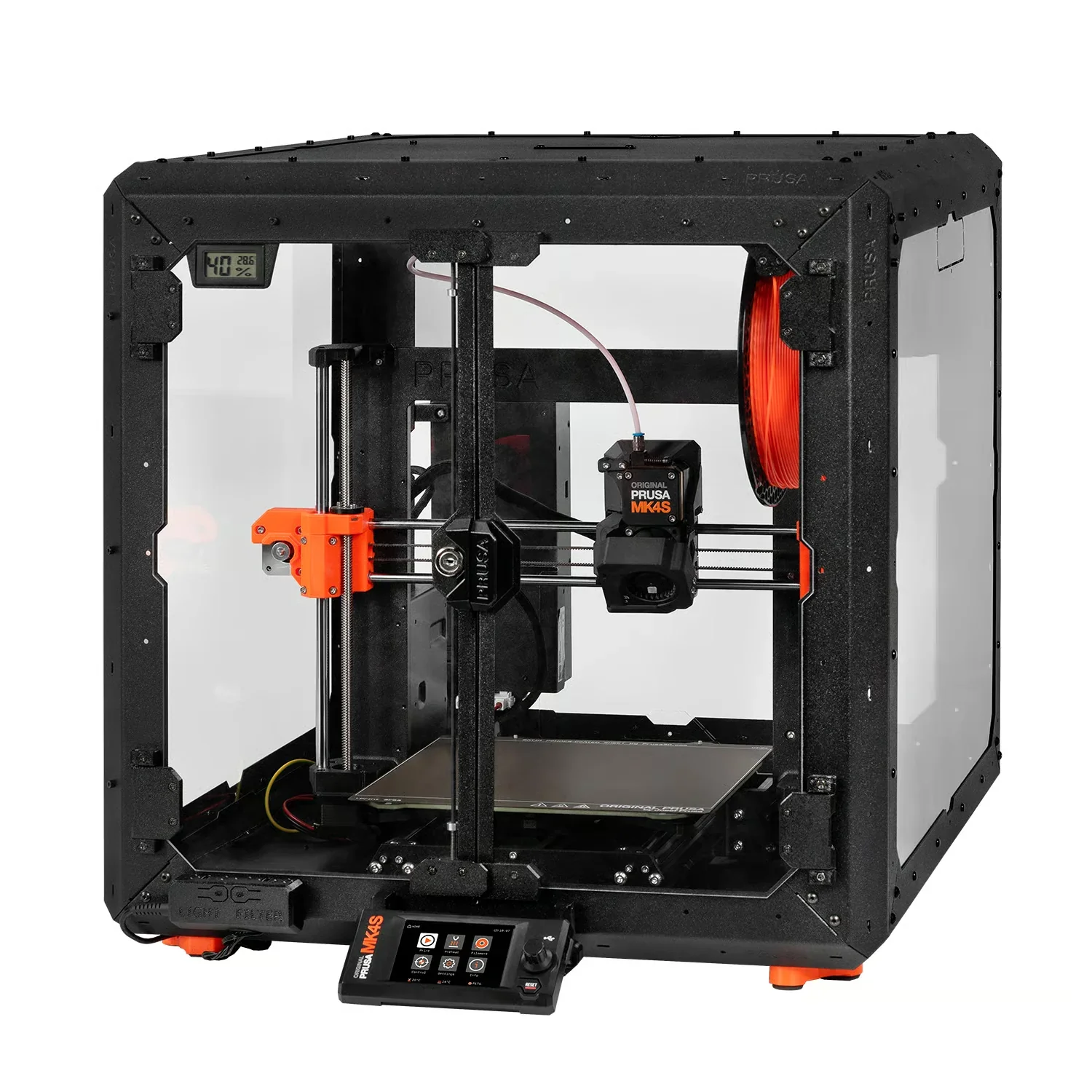 |
| MMU3 Multi-Material Upgrade | Multi-material upgrade that adds automatic filament switching for compatible Prusa printers, enabling multi-material or multi-color prints from a single printer. | $468 | 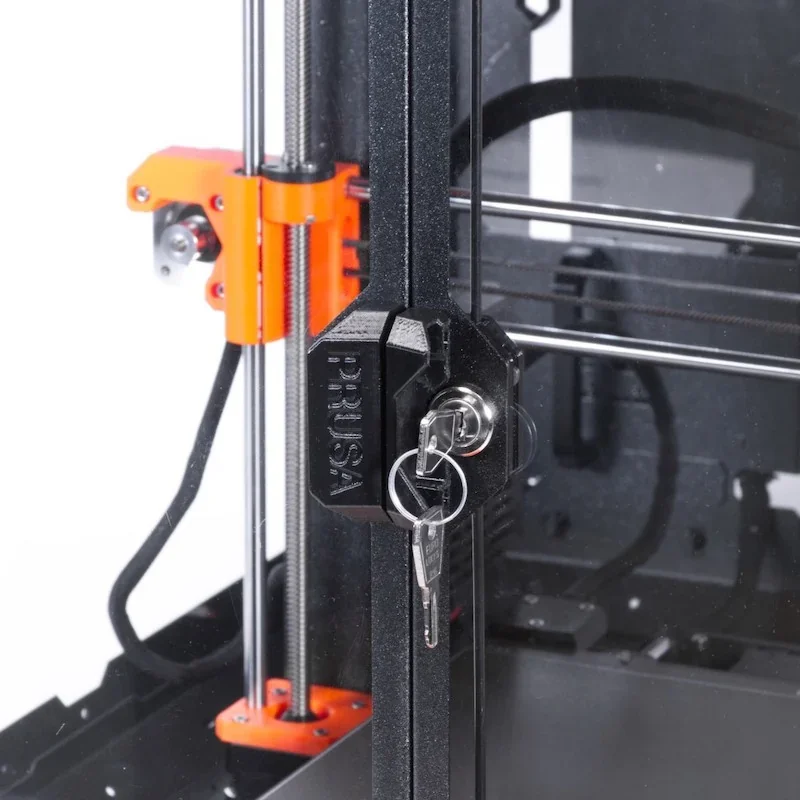 |
Enclosure Add-ons (Filtration, Lighting, Safety & Cabling)
| Accessory | Function | Price (USD) | Image |
| Advanced Filtration System for Original Prusa Enclosure | Side-mounted air filtration add-on for the Original Prusa Enclosure to reduce VOC odors and ultrafine particles (UFPs). Uses a high-pressure blower and a 2-in-1 filter (HEPA rated 99.9% efficiency + active carbon granules). Designed for easy filter replacement; estimated filter life at least 600 hours of runtime. Requires the Enclosure Basic Board and PSU (sold separately) for power/control. Package includes blower, HEPA filter, blower o-ring, filter bracket, and 4 vibration dampers. | $119 | 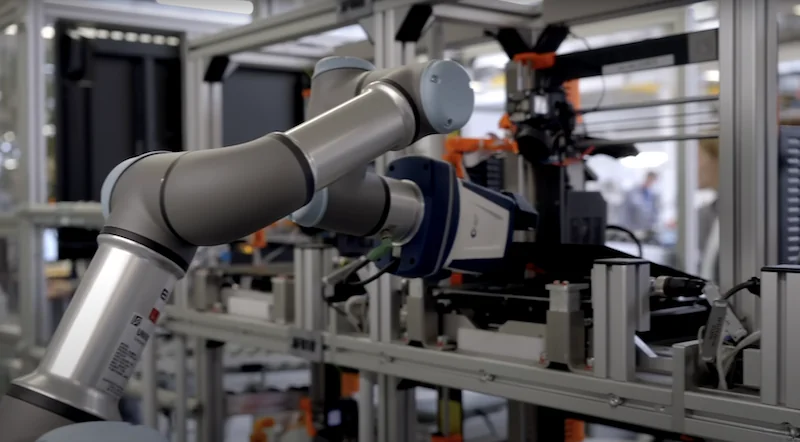 |
| Basic Board and PSU for Original Prusa Enclosure (for Filtration unit and LED) | Power/control electronics pack for the Original Prusa Enclosure that is required for enclosure add-ons such as the Advanced Filtration System and White LED Strip. One Basic Board + PSU can power both add-ons at the same time (both connect to a single board). Package includes Enclosure Basic Board, power supply, power-cord Y-splitter, and Basic Board cover (PSU mount not included). | $70 | 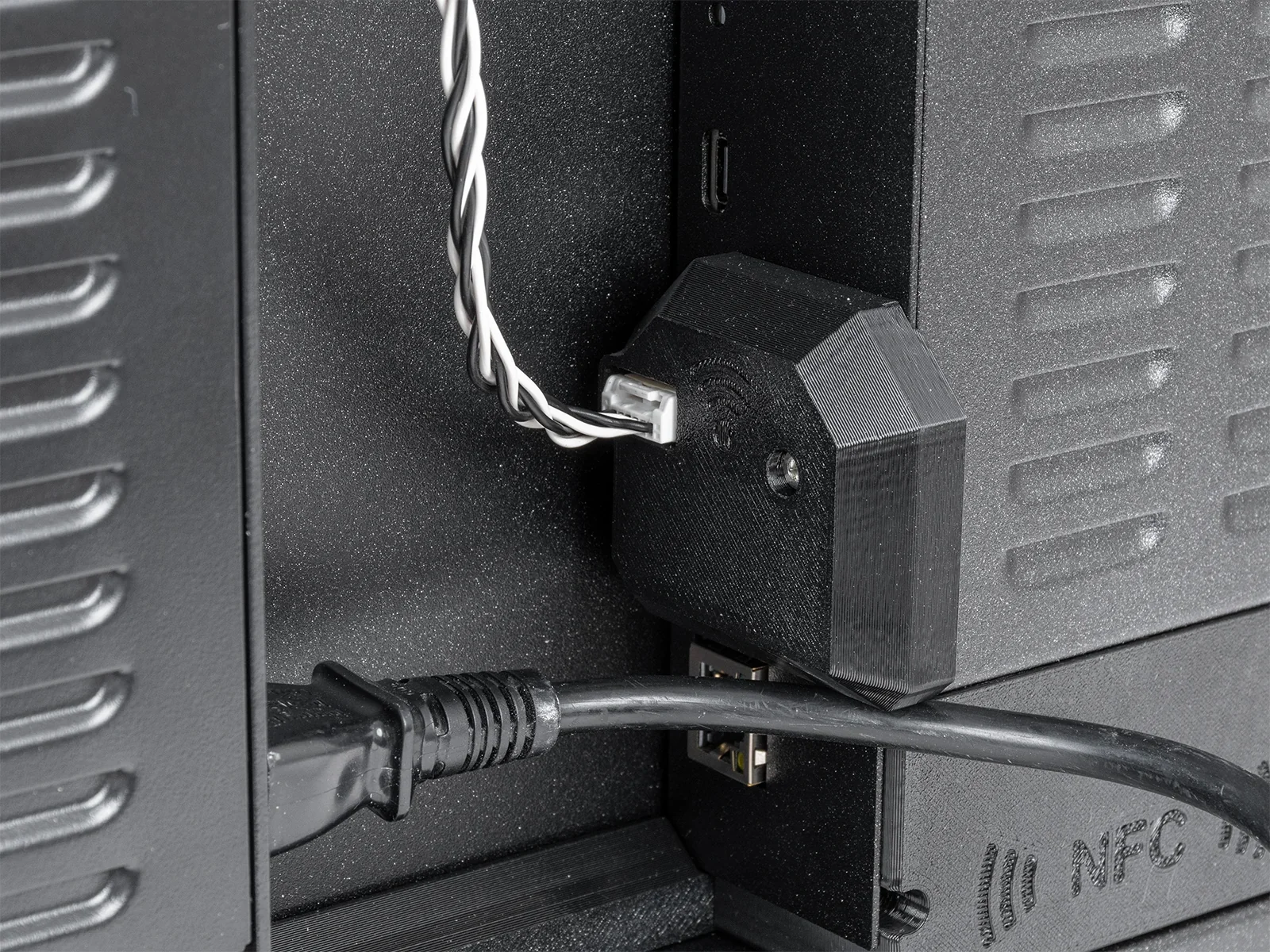 |
| Fire Suppression System for Original Prusa Enclosure MK |
Self-contained, tube-style automatic fire suppression for the Original Prusa Enclosure. Works without power and triggers automatically at high temperatures. Uses a clean extinguishing agent, the used concentration is harmless to people. Includes a BlazeCut T Series tube (T033E) and two P-clamps. |
$165 | 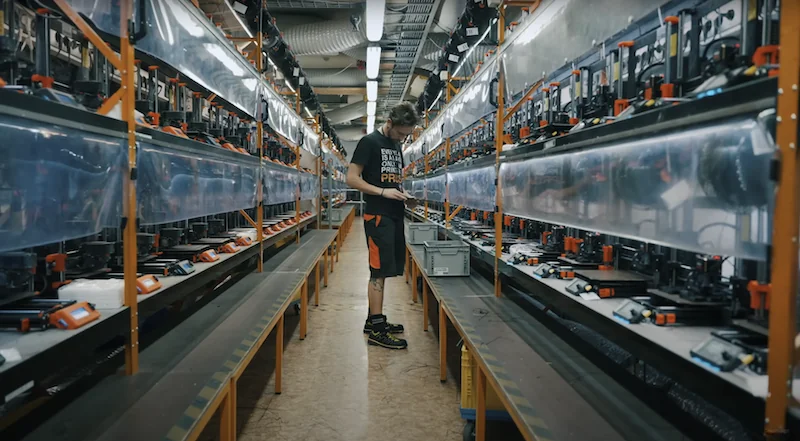 |
| HEPA filter | Replacement HEPA filter element for the Advanced Filtration System. Estimated life span is at least 600 hours of runtime. | $41 | 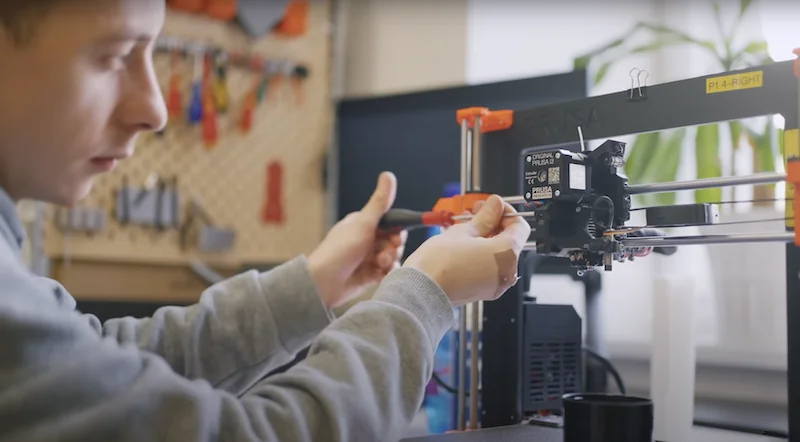 |
| Mechanical Lock for Original Prusa Enclosure |
Mechanical door lock kit for the Original Prusa Enclosure, designed to prevent unsupervised access—useful for schools, universities, hackerspaces, and other shared spaces. Installs into the enclosure door. Includes the lock, lock rod(s), lock lever, handle with lock hole, and door holders (A/B). |
$36 |  |
| PSU Cable Quick-release for Original Prusa Enclosure (MK4/S) |
Quick-release connector kit for Original Prusa Enclosure (MK4/S) PSU cables, making it faster to disconnect and reconnect power wiring when you frequently remove the printer (e.g., print-farm maintenance). Compatible only with black (Delta) PSUs; silver PSUs require an upgrade first. |
$70 | 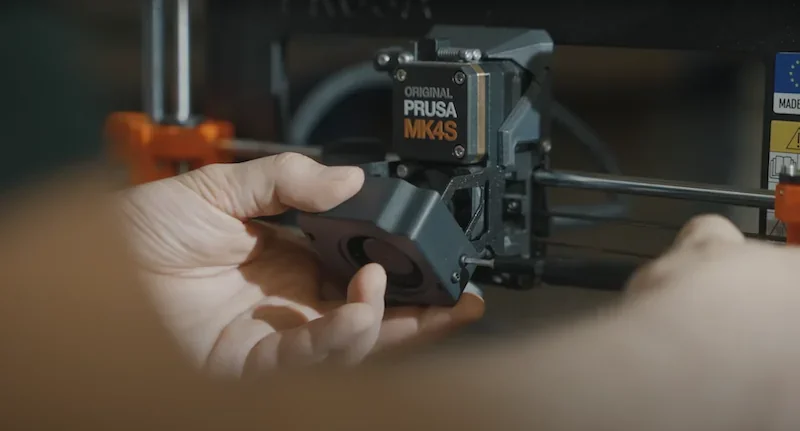 |
| White LED Strip for Original Prusa Enclosure |
LED lighting add-on for the Original Prusa Enclosure to illuminate the interior for easier setup and monitoring. Requires the Enclosure Basic Board and PSU (sold separately) to power the LED strip. Default color is white, with an upgrade path later via SmartBox expansion (RGB / programmable). |
$57 | 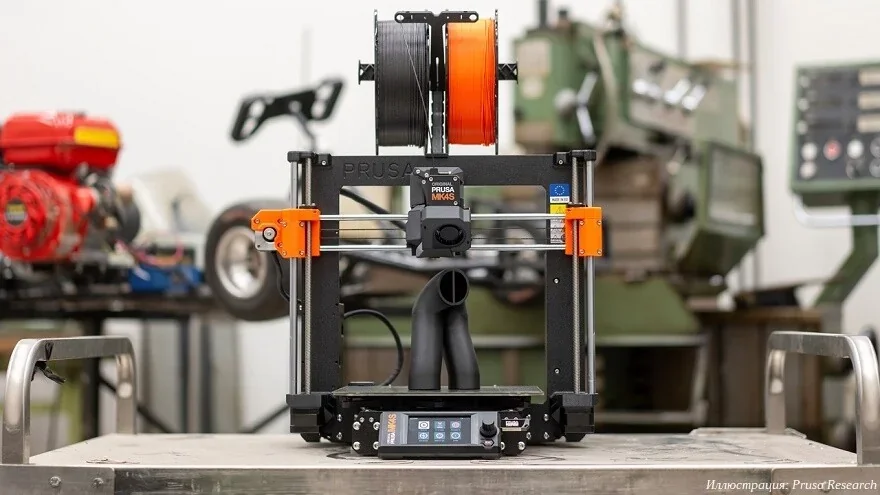 |
Build Surfaces (Print Sheets & Surface Films)
| Accessory | Function | Price (USD) | Image |
| Smooth PEI Print Sheet |
Removable spring-steel sheet with a smooth, double-sided PEI surface for MK52 heatbeds with embedded high-Curie magnets. Optimized for PLA, offers strong adhesion with most materials, and leaves a smooth bottom finish. Notes: don’t clean with IPA before printing PETG (a release agent may be needed), and use glue stick for flexible filaments. |
$49 | 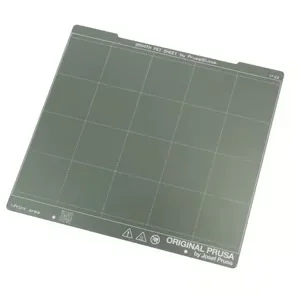 |
| PA Nylon Powder-coated Print Sheet |
Powder-coated spring-steel print sheet with a special surface finish for polyamide (PA) filaments, especially Prusament PA11 Carbon Fiber Black. Designed to improve adhesion where PA tends to stick poorly to standard textured or satin sheets. Care: clean only with pure water—IPA or acetone will quickly deteriorate the surface. Glue stick isn’t required or recommended. For greasy spots, use water with a drop of dishwashing detergent. |
$83 | 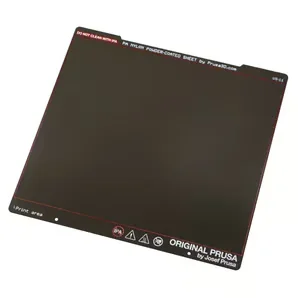 |
| PEI-Ultem sheet |
Replacement PEI-Ultem surface sheet with 3M 200MP adhesive backing (260 × 242 mm, 175 µm thick). Small dots may be visible and can slightly affect the bottom finish, but don’t impact print reliability. |
$13 | 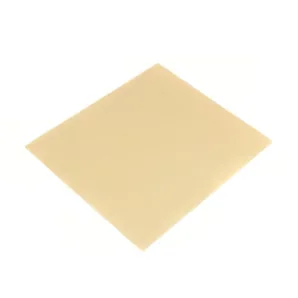 |
| PP powder-coated Print Sheet |
Powder-coated spring-steel print sheet designed for polypropylene (PP) filaments, providing a dedicated build surface to improve PP adhesion and ensure reliable release. |
$66 | 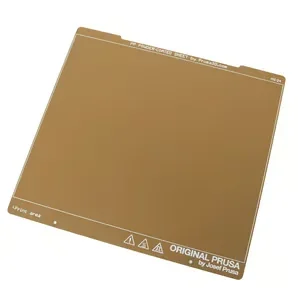 |
| Satin Powder-coated Print Sheet |
Powder-coated spring-steel print sheet with a lightly textured matte/satin finish, offering performance between smooth and textured sheets. Provides strong, balanced adhesion—especially for PLA and PETG—and is compatible with many other filaments (including ABS, ASA, FlexFill 98A, and Polycarbonate). Most materials can be printed without a separation layer; for frequent Polycarbonate printing, apply a glue-stick layer to prevent possible sheet damage. Notes: never clean with acetone, and adjust Live-Z when switching between sheet types. |
$66 | 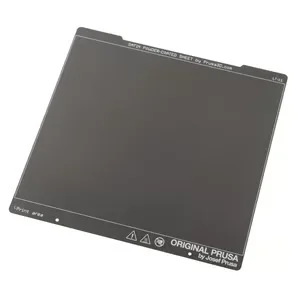 |
| Textured Powder-coated Print Sheet |
Textured, powder-coated spring-steel build plate that leaves a distinct textured finish on the bottom of prints. The powder coating is applied directly to metal for high durability, and the texture hides most tool marks and typical wear. Notes: never clean with acetone. |
$56 | 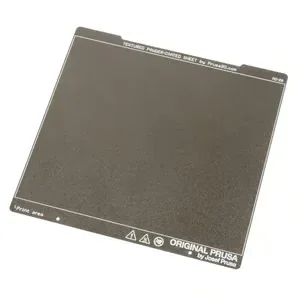 |
Extrusion System (Nozzles, Hotends & Thermal Protection)
| Accessory | Function | Price (USD) | Image |
| E3D Prusa Nozzle: DiamondBack |
DiamondBack Prusa Nextruder nozzles (E3D co-designed) use a solid polycrystalline diamond tip for unmatched abrasion resistance and precision with filled filaments, drop in with no hardware changes, run standard-flow profiles (not high-flow), and come in 0.4/0.6/0.8 mm variants (1.75 mm, up to 300 °C). |
$189 | 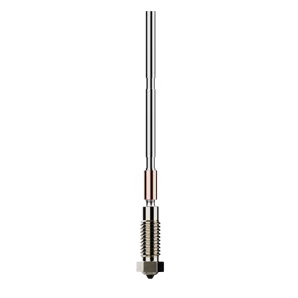 |
| E3D Prusa Nozzle: High Flow Brass |
Genuine E3D High Flow brass Prusa Nextruder nozzles use an all-metal filament path and a 4-channel high-flow geometry to boost volumetric flow for faster printing, drop in with no mount changes, and come in 0.4/0.6 mm (1.75 mm, up to 300 °C). |
$50 | 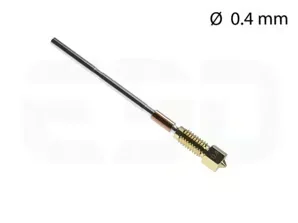 |
| E3D Prusa Nozzle: High Flow ObXidian™ |
Genuine E3D High Flow ObXidian™ Prusa Nextruder nozzles provide an all-metal filament path plus high-flow geometry and exceptional abrasion resistance via a tool-steel insert with E3DLC™ non-stick coating, drop in with no mount changes, and come in 0.4 / 0.5 / 0.6 mm variants (1.75 mm, up to 300 °C). |
$91 | 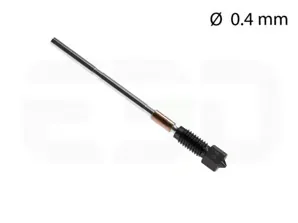 |
| Nextruder Hotend (brass) | Includes one selected-size Prusa brass nozzle, Nextruder heaterblock, 40 W heater (120 mm set), and NTC 100k thermistor (115 mm). Available in 0.4 / 0.6 / 0.8 mm variants. | $72 | 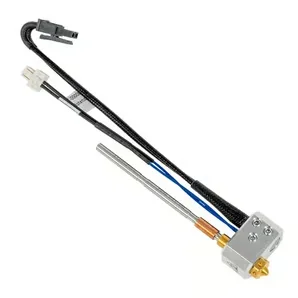 |
| Nextruder High Flow Hotend (brass) |
Includes one selected-size Prusa brass CHT nozzle, Nextruder heaterblock, 40 W heater (120 mm set), and NTC 100k thermistor (115 mm). Available in 0.4 and 0.6 mm variants. |
$83 | 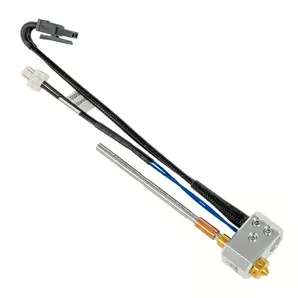 |
| Nextruder V6 Nozzle Adapter | Adapter that allows you to install a V6-compatible nozzle on the Prusa Nextruder. Package includes 1x Nextruder-to-V6 nozzle adapter (V6 nozzle not included). | $28 | 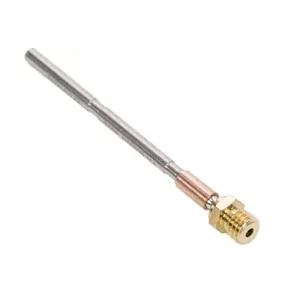 |
| Prusa Nextruder Silicone sock - set |
Install only on a clean nozzle/heaterblock and never while the printer is hot or running (burn risk); includes 3× Nextruder socks. |
$8 | 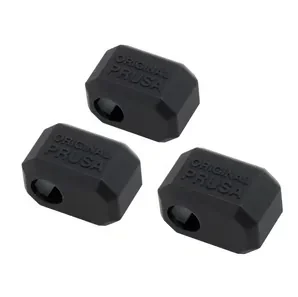 |
| Prusa Nozzle (brass) |
Prusa’s new Nextruder nozzles use an all-metal filament path (no PTFE) for better reliability and faster nozzle changes. |
$28 | 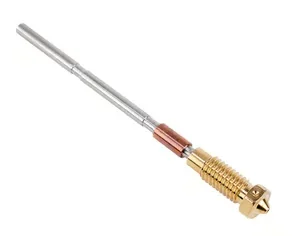 |
| Prusa Nozzle CHT (Brass) |
Nextruder brass CHT nozzle uses an all-metal filament path (no PTFE) and Core Heating Technology for more even heating and improved flow; includes 1× Prusa Nozzle brass CHT. Available in 0.4 and 0.6 mm variants. |
$44 | 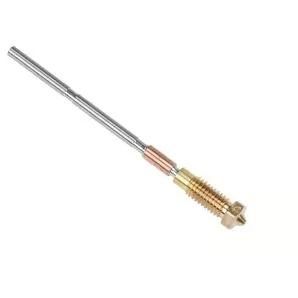 |
| Prusa Nozzle ObXidian |
Prusa Nozzle ObXidian is a hardened-steel, corrosion-coated Nextruder nozzle built for long-lasting performance with abrasive filaments like carbon fiber; includes 1× Prusa Nozzle ObXidian. Available in 0.4 and 0.6 mm variants. |
$75 | 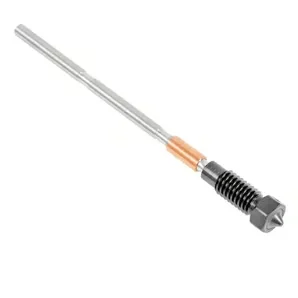 |
| Standard Nozzle Kit |
Kit of standard brass nozzles for a Prusa-compatible nozzle system, meant for easy replacement and for switching nozzle sizes. Includes 0.25, 0.4, 0.6, and 0.8 mm brass nozzles, plus a brass nozzle brush and CNC Kitchen nozzle cleaning wires. |
$138 | 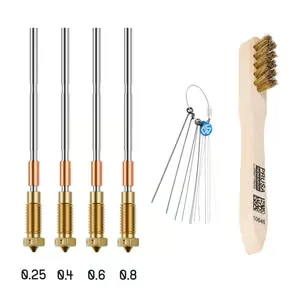 |
Materials & Bundles (Filament + Print-Surface Sets)
| Accessory | Function | Price (USD) | Image |
| Prusament PA11-CF (NFC) + PA Nylon Print Sheet BUNDLE |
Bundle includes Prusament PA11 Carbon Fiber Black (800 g, NFC) and a PA Nylon powder-coated print sheet; the CF-reinforced PA11 offers strong, low-warp parts with up to 190 °C temperature resistance and broad chemical resistance (e.g., NaOH, alcohols, acetone), while the included PA sheet boosts adhesion for polyamide filaments. |
$297 | 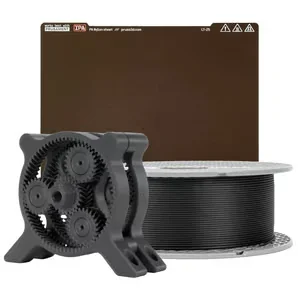 |
| Prusament PP-CF (NFC) + PP Print Sheet BUNDLE |
Bundle includes Prusament PP-CF (NFC) filament plus a PP print sheet, pairing carbon-fiber polypropylene with a matching build surface for reliable adhesion and release. |
$149 | 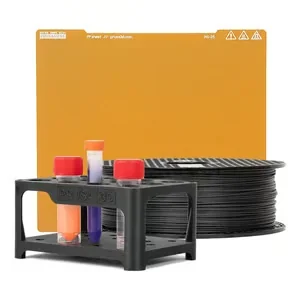 |
| Prusament PP-GF (NFC) + PP Print Sheet BUNDLE |
Bundle includes Prusament PP-GF (NFC) filament plus a PP print sheet, pairing glass-fiber polypropylene with a matching build surface for reliable adhesion and release. |
$149 | 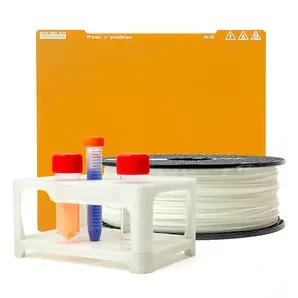 |
Filament Handling
| Accessory | Function | Price (USD) | Image |
| Spool Holder |
Replacement filament spool holder used to mount and support a filament spool on compatible Prusa setups, replacing a missing or damaged holder. |
$6 | 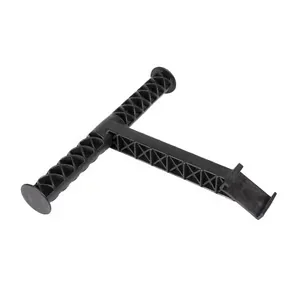 |
Electronics & Utility Accessories
| Accessory | Function | Price (USD) | Image |
| Accelerometer Set |
Accelerometer module for Prusa developers/modders to measure axis resonance and recalibrate Input Shaper after hardware mods (e.g., Nextruder changes), connecting to the MK4S xBuddy port and mounting on the printhead and heatbed — easy to install, and unnecessary for stock printers with factory-tuned values. |
$26 | 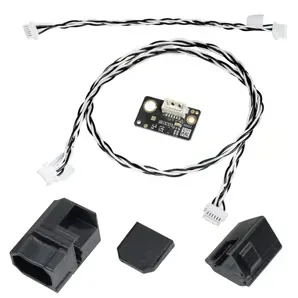 |
| GPIO "Hackerboard" Set |
GPIO module for MK4/S, MK3.9/S, and MK3.5/S modders that connects to the xBuddy I2C port to control external devices and triggers via custom G-code from PrusaSlicer — e.g., camera timelapse, LED status lights, fans/servos, enclosure functions, or buttons/macropads that run stored scripts. |
$26 | 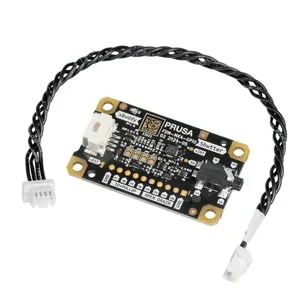 |
| Jumper cable |
Jumper cable for connecting the xBuddy board to the Wi-Fi pass-through, enabling only the rear connector on the Wi-Fi board; includes 1× jumper cable. |
$9 | 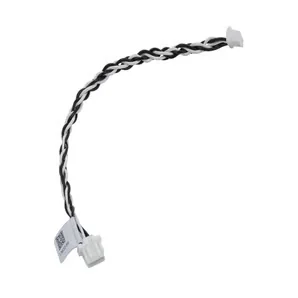 |
| MK4S Starter Set |
Bundle includes Prusa brass CHT nozzles (0.4 and 0.6 mm), a satin powder-coated print sheet, a brass nozzle brush, and five nozzle-cleaning needles. |
$140 | 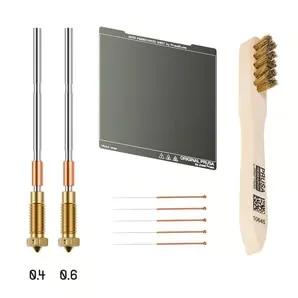 |
| USB-A cable to micro USB 1m |
1 m USB cable with USB-A male to Micro-USB male connectors; includes 1× cable. |
$2 |  |
How reliable is the Prusa MK4S?
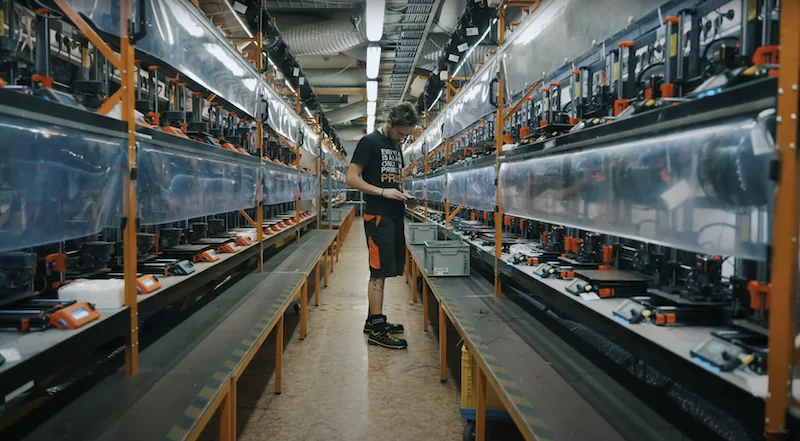
The MK4S has a warranty claim rate under 1%, backed by 1,000,000+ test hours on Josef Prusa’s 700-printer farm. In ShipNation’s 950-hour endurance test, it averaged 864 uptime hours with a 10% scrap rate—improving over the MK3S Plus (15%) and ranking just behind the Bambu Lab P1P in throughput.
What maintenance is required for the Prusa MK4S?
Before Every Long Print
- Clear debris from printer and under heatbed (filament scraps, dust, supports).
- Clean print sheets: acetone (Smooth), 90% IPA (Textured), soap + water (PA Nylon).
Every 200 Hours
- Run Self-test (fans, heaters, axes, thermistors, Loadcell).
- Wipe smooth rods, apply Prusa lubricant, move axes to spread evenly.
Every 600–800 Hours
- Power down, reseat X-Buddy and Nextruder connectors.
- Clean extruder/heatsink fans with canned air; remove trapped strands.
- Vacuum extruder feed gear via idler door to prevent under-extrusion.
Annual / 1,000+ Hours
- Regrease linear bearings if motion feels gritty.
- Inspect belts; adjust if calibration circle prints out-of-round.
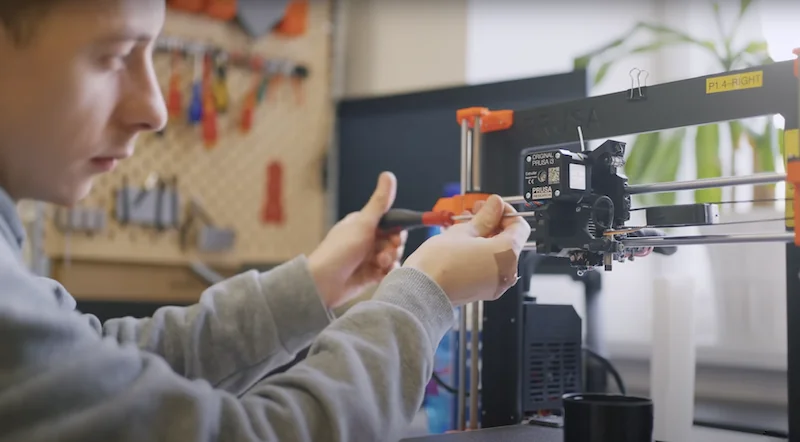
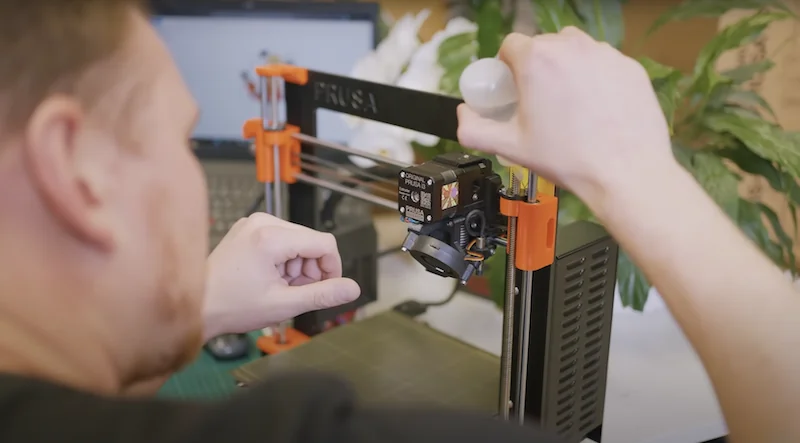
The MK4S’s open design allows easy maintenance with basic Allen keys—no welded or glued parts. Safety features like fan RPM monitoring detect issues early, while the modular build and durable construction keep the printer reliable in continuous-use environments.
The full manual: https://help.prusa3d.com/product/mk4s
What support and warranty come with the Prusa MK4S Original Prusa 3D Printer?
The MK4S includes a 2-year warranty for EU/EEA consumers, and 1 year for EU businesses and other regions. Optional 1- or 2-year extensions are available at purchase. Coverage applies to all components except consumables like print sheets, which are only covered for manufacturing defects.
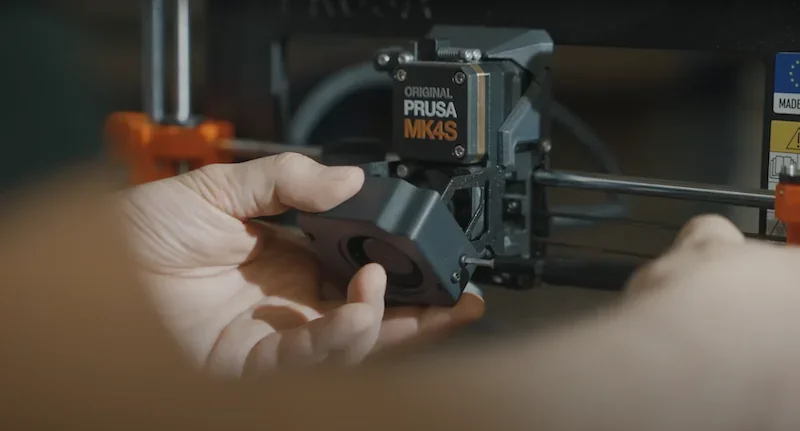
Prusa Research offers 24/7 live chat support in seven languages, backed by a Knowledge Base, tutorial videos, and detailed documentation. The included 3D Printing Handbook covers setup, calibration, and troubleshooting, while the kit assembly manual uses full-scale illustrations for clarity.
Prusa provides full technical support even after the warranty ends. Replacement parts are available, and repairs can be arranged at their service center for a fee. The MK4S’s open design keeps all components accessible for maintenance, while Prusa’s upgrade paths between generations extend printer lifespan without requiring full replacement.
Full up-to-date warranty terms are available on the manufacturer's website: https://help.prusa3d.com/article/warranty_2288
| Service Package | What’s Included | Price (USD) |
|---|---|---|
| 3D Printing and Modeling for Beginners (MK4S) | Intro course for absolute beginners using the Original Prusa MK4S. Covers downloading 3D models, using PrusaSlicer, basics of 3D modeling, and some printer maintenance. | $0 |
| 1 Year of Extended International Warranty | Extends the standard warranty and 24/7 support byone additional year. Includesfree repairs and replacement partsduring the extended coverage period. | $145 |
| 2 Years of Extended International Warranty | Extends the standard warranty and 24/7 support bytwo additional years. Includesfree repairs and replacement partsduring the extended coverage period. | $265 |
| 3D Print Photography: The Complete Guide | Beginner-friendly course covering photography fundamentals (exposure, depth of field, white balance, etc.) plus practical tips for presenting 3D prints and other still life. Works for smartphone or camera users; no expensive gear/software required. | $18 |
| PrusaSlicer Masterclass – Beginner to Advanced | Step-by-step PrusaSlicer training from basic workflow to advanced features (e.g., multi-color within a single layer, camera mode controls). Includes hands-on practice with4 sample projectsand quizzes. Suitable for both beginners and experienced users of any 3D printer. | $30 |
How much does the Original Prusa MK4S by Josef Prusa cost?
The Original Prusa MK4S costs $1,345.00 for the assembled version, which is ready to print within 15 minutes of unboxing. The self-assembly kit, about 27% cheaper, uses the same components but requires user assembly. Both versions include a spool of Prusament PLA, identical hardware, and full access to Prusa’s software ecosystem. With its print quality, reliability, and strong support, the MK4S offers lower long-term ownership costs than cheaper printers that often need frequent repairs or upgrades.