Phrozen Sonic 4K 2022 Resin LCD 3D Printer


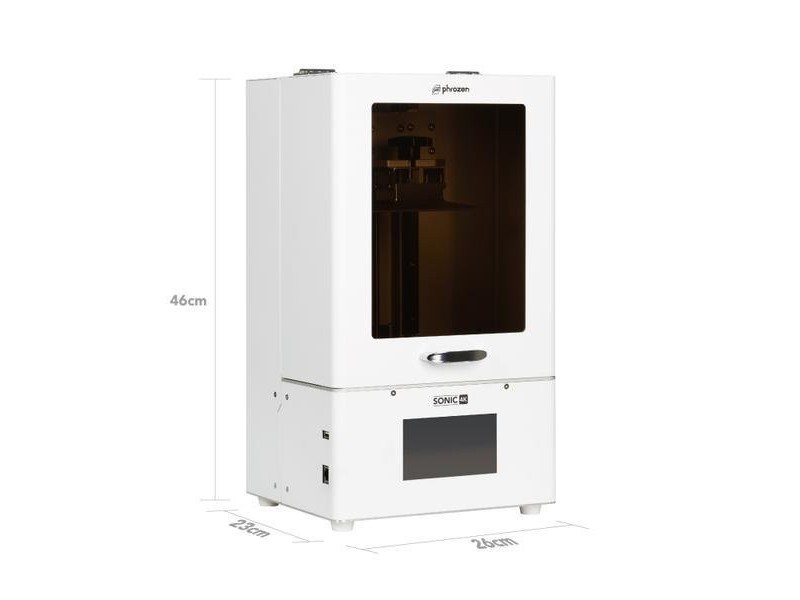



- Astonishingly detailed outputs
- Faster printing speed
- Perfect for dental models
- Compatible with 3rd party resins
- FREE Delivery
- Limited 1 Year Warranty
- Local U.S. Support
- FREE Training
- Essential parts required to operate the printer
- A build plate
- Metal resin vat
- All the necessary tools
The Phrozen Sonic 4K 2022 is a desktop LCD 3D printer produced by Phrozen — a Taiwanese company founded in 2016 that has quickly gained ground in the resin 3D printer market. Their machines are used all over the world, both in professional fields such as dentistry and jewelry, and by amateur 3D printing enthusiasts.
It is a powerful machine creating astonishingly detailed models for dental practice and other applications. The Sonic 4K boasts an ultra-high 4K (3840 x 2160) definition at 722 PPI with increased speed (90 mm/h) and can print single layers in just two seconds. The 2022 model includes adjustable light intensity, a heating system, resume-print capability following power loss, an air purifying system, and the DS Slicer software with preset profiles for major dental resins.
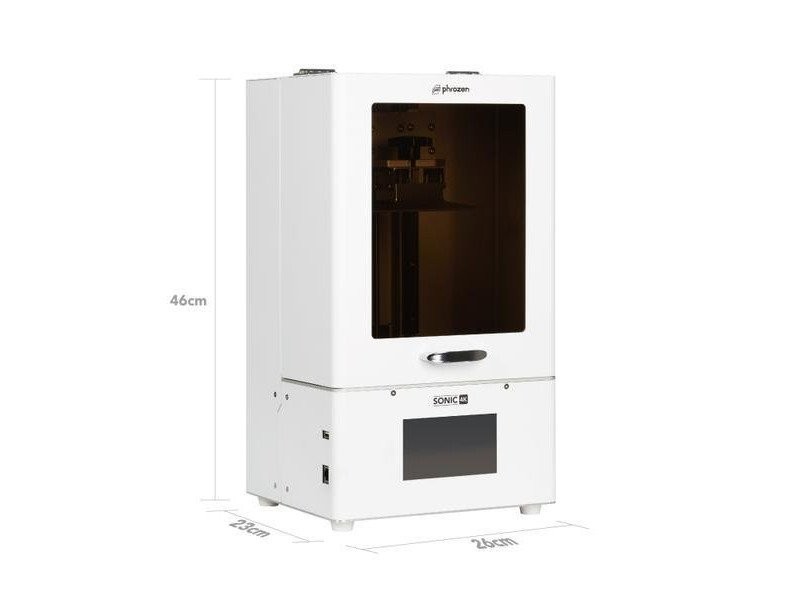
CLEARANCE! Open-Box Unit Available at $699.
Unit Condition: Open-box. Build plate shows minor surface scratches from previous operation.
In-House Inspection & Service Completed:
- Replaced nFEP film in the vat.
- Installed a new LCD screen.
- Updated firmware to the newest available.
- Calibrated the printer and executed several functional test prints.
Our in-house technical team confirmed the printer is fully functional.
See photos here: https://drive.google.com/drive/folders/1h9N6WX6XX4MOaFihEiq1wRpn9ivvVA0X?usp=sharing
3D printers marked as “Clearance” in the product title are final sales and are not covered by the 14-day return policy.
Video Review
Watch our video review of the Phrozen Sonic XL 4K — the larger sibling in the same product line. The core technology, print quality, and software workflow are shared across both models:
- Ultra-high 4K resolution (3840 x 2160) at 722 PPI with 35 µm pixel size
- Fast print speed up to 90 mm/hour with 2-second layer curing
- Built-in heating system for optimal resin temperature control
- Air filtration system for safer workspace
- ParaLED 3.0 matrix ensures uniform curing across the entire print area
- Dental-oriented with DS Slicer presets for major dental resins
- Robust mechanics with dual MGN15 linear rails and ball screw Z-axis
- Build volume (135 x 75 x 200 mm) may be limiting for larger projects
- No Wi-Fi or network connectivity (USB only)
- Touchscreen menu can feel basic compared to some competitors
- Mono LCD screens have a limited lifespan (up to 2,000 hours)
Design & Build Quality
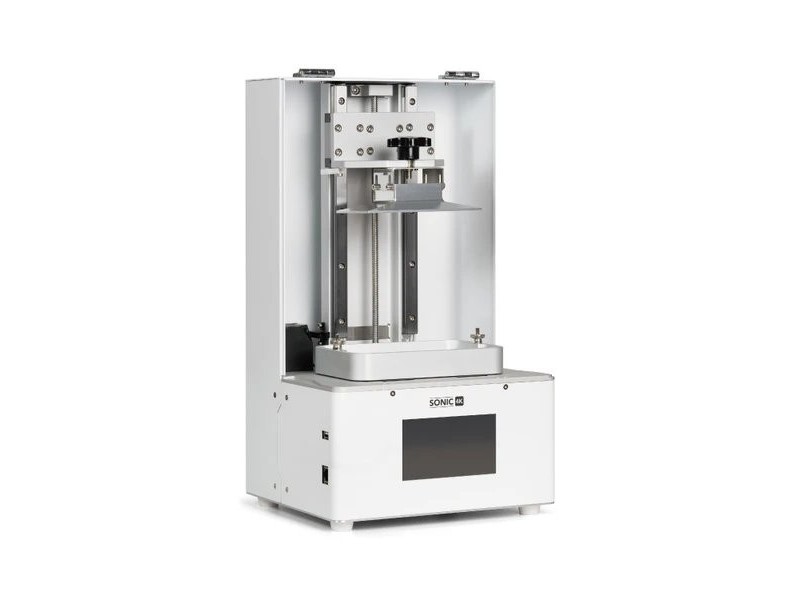
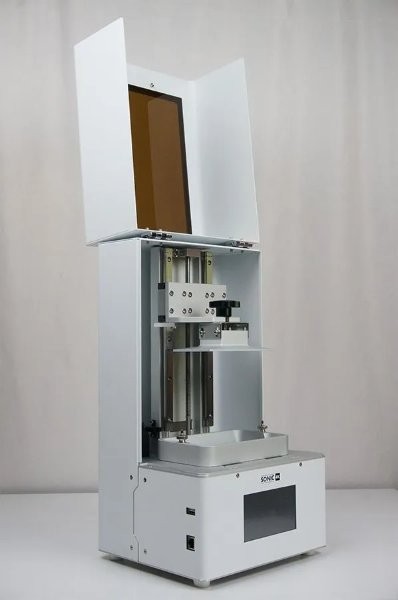
The Sonic 4K features a sturdy body made of steel and a flip-up lid, standing approximately 80 cm tall when opened. Like all Phrozen printers, it comes fully assembled and ready to operate.
Z-Axis & Mechanics
The Z-axis moves on two MGN15 linear rail guides driven by a ball screw fixed on bearings from below and above. The stepper motor is installed inside the body. The aluminum massive carriage and the whole assembly is fixed on a wide base attached to the body, ensuring the Z-axis will not wiggle or deviate causing print defects even under heavy loads.
Build Platform
The anodized aluminum build plate has a slightly roughened surface with small bevels at the top, allowing the resin to flow off more freely during printing. The platform is attached to the carriage with two thumb screws.
LCD Panel & Light Source
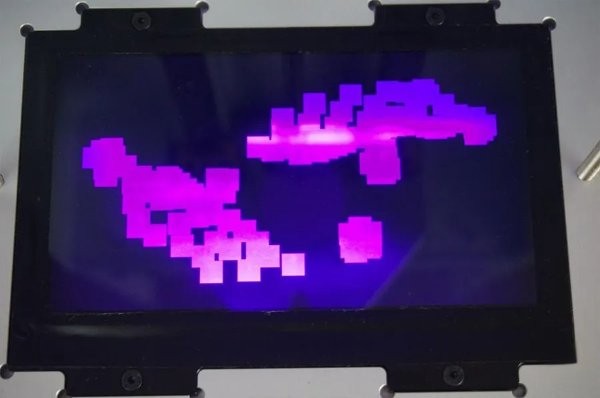
The LCD panel has a diagonal of 6.1 inches with 4K resolution (3840 x 2160 pixels), giving a pixel size of 35 micrometers. Such accuracy is sufficient for most tasks including dentistry, technical objects, and artistic models.

The screen is monochrome, providing good light transmission with less heat emission and geared to work much longer than RGB screens, with Phrozen putting its word to 2,000 hours of service life. The curing light module uses ParaLED 3.0 technology — a matrix of ultraviolet LEDs with special lenses over them, providing uniform curing over the entire print area.
2022 Version Upgrades
The 2022 model introduced several key improvements over the original Sonic 4K:
- Built-in heater: All resins have an optimal printing temperature at which the material is not too thick, cures well, and has minimal shrinkage. Thanks to the built-in print area heater, there is no need to control the room temperature as the temperature inside the printer will be maintained automatically.
- Air filtration unit: A full-fledged activated carbon air filter replaces the basic bag filter of the previous version, addressing safety and user comfort concerns.
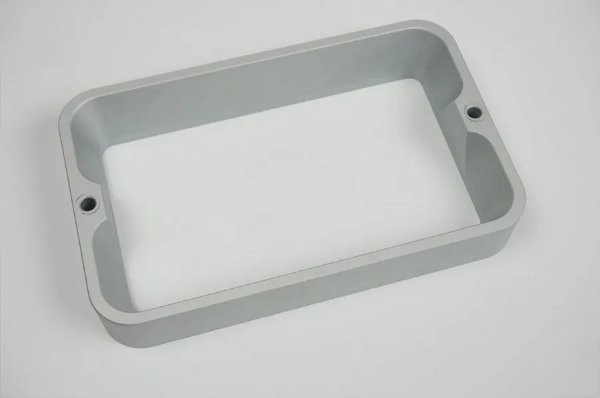
- Improved resin vat: Redesigned with handles on the sides, a wider top to store more material, and a cutout for draining resin.
- Adjustable light intensity: Updated ParaLED 3.0 LV module is slightly more powerful than the previous version, with adjustable curing intensity to boost print efficiency.
- Resume printing: The printer can resume printing after a power outage.
- Specialized door buffer: Increases the lifespan of the printer by preventing wear from repeated lid opening.
- DS Slicer: Comes with ready-to-use slicing profiles preset for major dental resins (Phrozen, Keystone, Nextdent, Enlighten, Harzlabs, Dreve, Dentona, Detax, Graphy, Whipmix, Vericom, Saremco). Supports high-speed Turbo 3D printing mode and Multi para-slicer — these two functions combined allow dental users to print up to 2 times faster than on conventional 3D printers. Also features automation capabilities such as easy drainage hole setup and optimal orientation for reliable printing.
- Redesigned interface: Renewed touchscreen firmware with additional controls for LED power, temperature, and print resume.
Connectivity & Controls
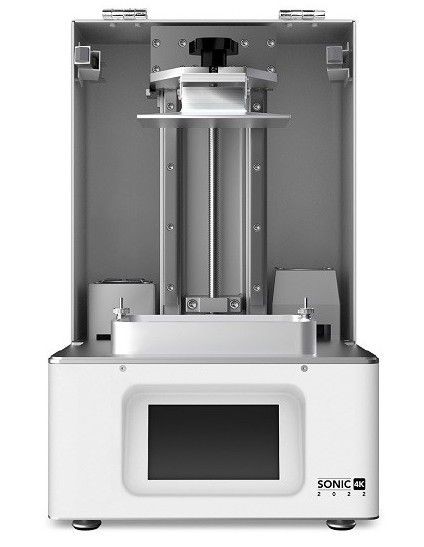
The device can be controlled through a 5-inch touchscreen on the front panel. The menu is simple, with all the essential controls: sliced files for printing, print profiles, settings, shutdown, reboot, status, and update functions.

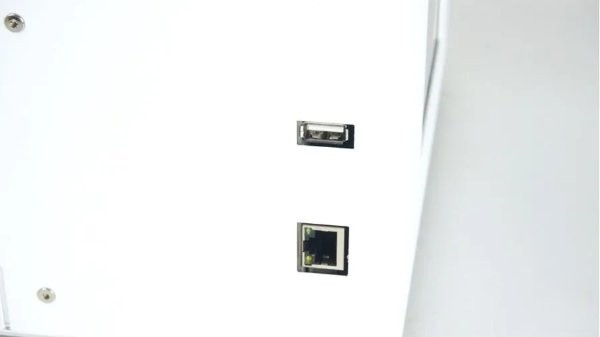
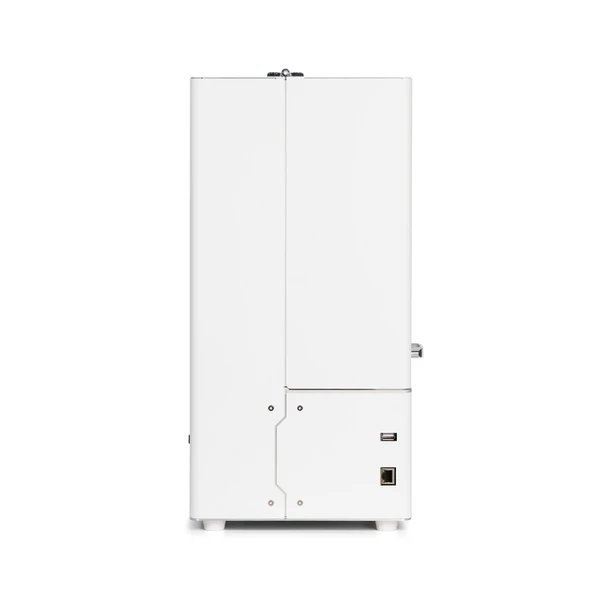
On the back of the printer, two USB ports are located alongside a power port and power button. One port can host the included Wi-Fi dongle for wireless network connection. The second can be used for a USB flash drive for local printing. There is also an Ethernet port for a wired network connection.
When the machine is connected to a local network via cable or Wi-Fi, you can access its web interface through a browser. The web interface contains tabs for tools, Wi-Fi settings, print profiles for different resins, and a Plates tab for loading sliced models and starting prints. Downloading files and printing via the web interface is the most convenient workflow.
Software
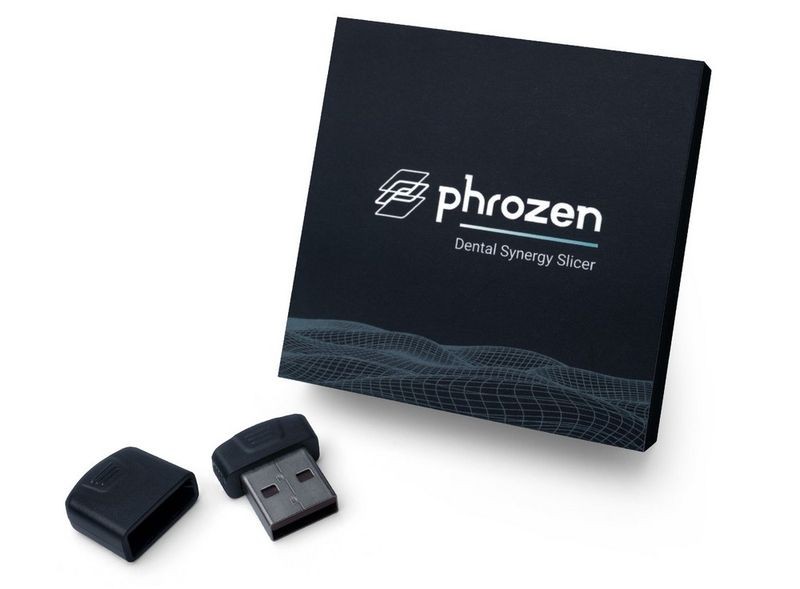
The Sonic 4K 2022 comes with the Dental Synergy (DS) Slicer developed in-house by Phrozen. It features a very user-friendly interface with large, self-explanatory buttons and easy navigation. The DS Slicer includes ready-to-use profiles for major dental resins (Phrozen, Keystone, Nextdent, Enlighten, Harzlabs, Dreve, Dentona, Detax, Graphy, Whipmix, Vericom, Saremco) and supports the high-speed Turbo 3D printing mode and Multi para-slicer, enabling dental users to print up to 2x faster. Its automation capabilities allow easy setup of drainage holes and optimal model orientation for reliable printing.
The printer also includes a free license for Phrozen 3D (powered by Formware) — a professional slicer with an array of features including flexible settings management, automatic and manual support generation, hollow model creation, drainage holes, special infills, model error checking, and even a feature to stack objects vertically for maximum build volume utilization.
In addition, the printer is compatible with Chitubox, one of the most popular free slicing programs. It works with all standard file formats.
Getting Ready
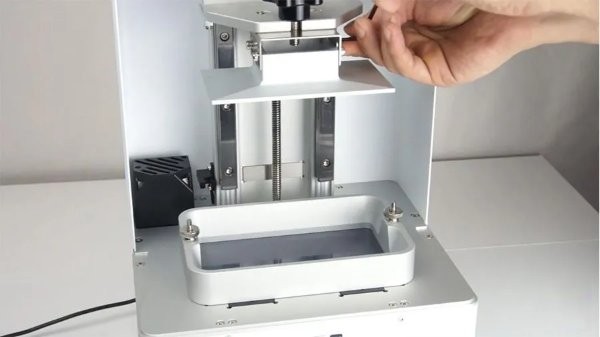
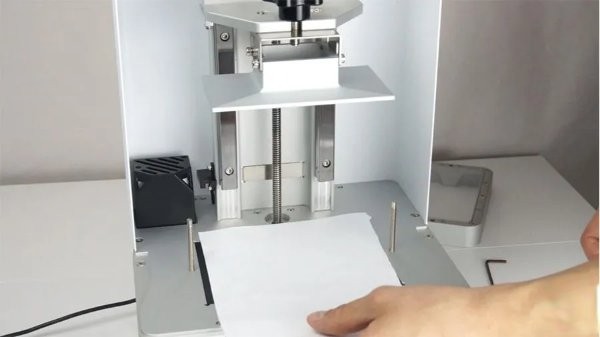
Calibrating the print bed follows the standard procedure for resin 3D printers. Remove the vat and place a sheet of paper on the screen. Loosen the four screws on the platform so that it can move freely. Go to the Z-axis in the printer's menu and click the calibration button — the platform will lower down to the bottom. Tighten the screws while gently pressing the platform against the sheet of paper. Tap Next, and the platform will rise up. The calibration is complete. It is advisable to repeat this 2 to 3 times for best results.
Test Prints & Print Quality
The Sonic 4K is powered by MSLA (LCD SLA) technology. A photopolymer resin is illuminated by an ultraviolet light source (405 nm wavelength) through a screen that displays images of the layers. The printer can work with any resin that cures with this wavelength, and the market has a lot to offer in terms of materials.
Dental Models — NextDent Model Ortho Resin
For the first test, we used NextDent Model Ortho dental resin in yellow, designed for printing demonstration and master models of teeth, aligner thermoforming molds, and similar applications. We printed a small model with teeth and a separate bridge designed to connect to them.
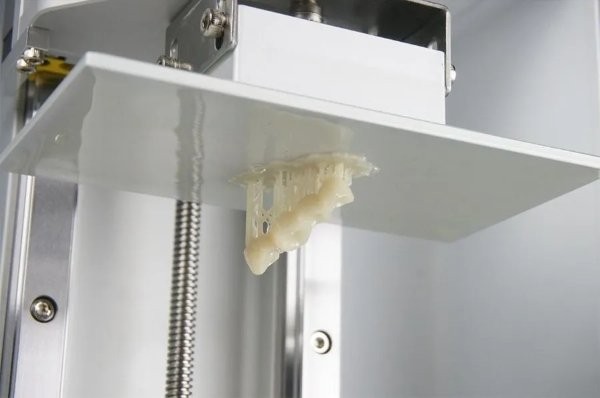
The model with teeth was printed directly on the build plate, while the bridge was suspended on supports for best surface quality on the mounts. After rinsing in isopropyl alcohol and post-curing under UV light, the bridge and the first model joined fine — with a little effort, but firmly.
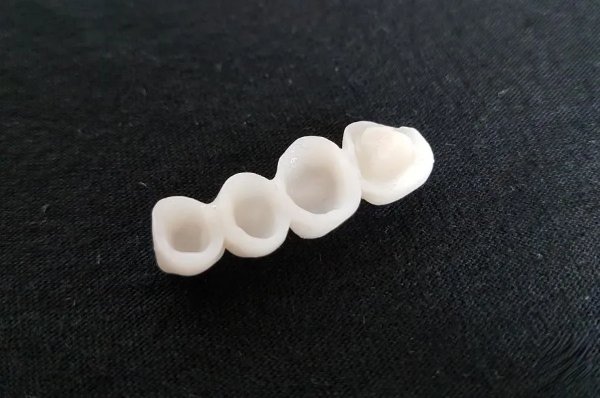
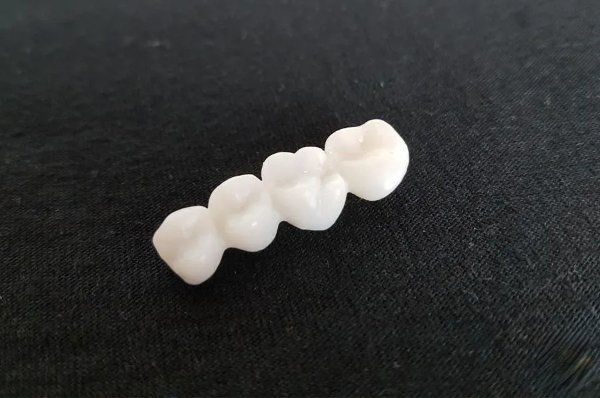
In a second run, we printed jaws in two parts with openings, a tooth, a crown, and a small gum pad — all on supports due to the complex geometry. The crown fit perfectly, while the tooth needed minor post-processing to remove support traces for a snug fit.
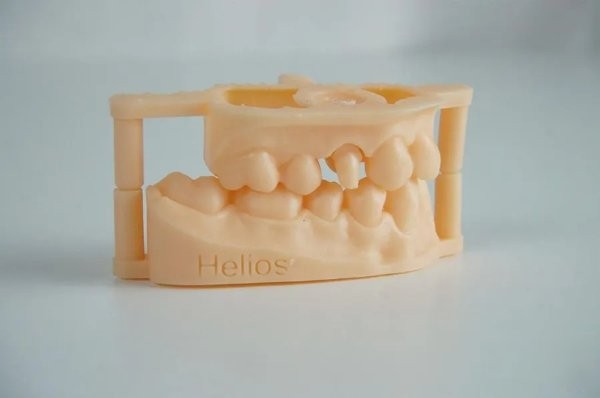
In a third run, we printed five teeth master models — two upper and three lower jaws — oriented to cover the entire print surface with no supports, to check lighting uniformity. No problems occurred. The surface quality was more than satisfactory on all parts.
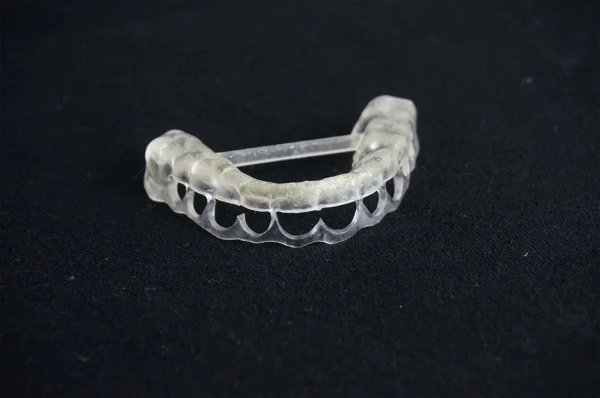
Surgical Templates — NextDent OrthoClear Resin
We printed three regular surgical templates and one template for gingival surgery using NextDent OrthoClear resin. All models were suspended on supports. Nothing broke off, and the models turned out great — even small areas and defects in the 3D models were printed successfully, with all dents and holes fully cured.
Jewelry Casting — SprintRay Casting Resin
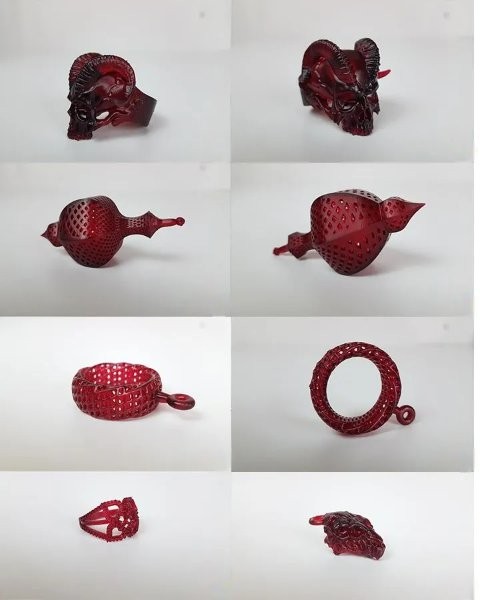
We printed a clasp prosthesis, a crown, a bridge, and a couple of rings using SprintRay dental casting resin — a specialized material that leaves almost no ash residue when burned out, ideal for creating molds for metal casting.

The clasp prosthesis turned out excellent despite its large number of complex and overhanging forms. None of the supports failed, leaving almost no traces after removal. The crown and bridge also came out well. The rings feature high detail at first glance, though upon closer inspection some areas show small stain marks on smooth curves — a consequence of pixel resolution. This can be partially addressed with anti-aliasing in the slicer, but for high-end jewelry, a printer with higher XY resolution is recommended.
Art Model — Ash Gray Modeling Resin
For the final test, we printed a highly detailed figurine using ash gray modeling resin. The model was scaled up to take the entirety of the build area's height, resulting in a 15-hour print with no support structures needed.

After washing and post-curing, we got a very beautiful and detailed model — even the smallest elements were pronounced. Textures of fabrics, patterns, thin ribbons, everything turned out well. The model looks really impressive and is a definite success.

Post-Processing Tips
After printing, models should be rinsed in isopropyl alcohol and post-cured under UV light. In a professional environment, special devices such as ultrasonic washing vats and dedicated UV lighting chambers are typically used — these greatly simplify post-processing and save time. Models can also be washed by hand using regular brushes, and curing can be carried out in direct sunlight.
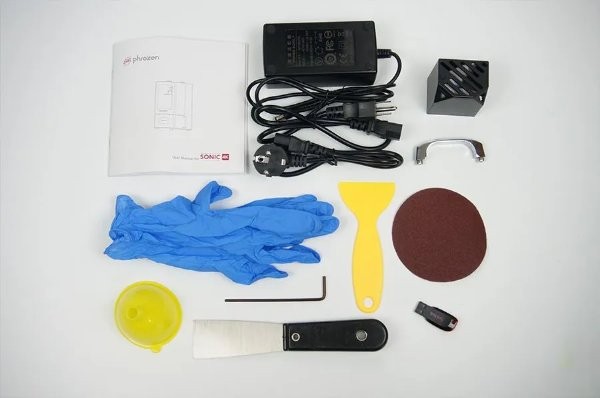
What's in the Box
- Phrozen Sonic 4K 2022 3D Printer
- Anodized aluminum build plate
- Metal resin vat with pre-mounted FEP film
- Air filter
- Power supply and cable
- USB flash drive
- Wi-Fi dongle
- Metal and plastic scrapers
- Hex key, sandpaper
- Rubber gloves and protective equipment
- Door handle
- User manual
For some items, package content may change. In case of any questions, please get in touch.
Look and Feel
The Phrozen Sonic 4K 2022 has a compact footprint that fits easily on any desk or workstation. The window on the front is made of tinted plastic that does not release ultraviolet light, allowing you to watch the printing process. The lid opens along with half of the upper part of the body, giving convenient access to the entire print area. Door closers on the sides prevent the cover from accidentally falling.
Bottom Line
The Phrozen Sonic 4K 2022 represents a reliable and efficient solution for professional 3D printing. It performed well in all tests with no issues or failed prints. The quality of final prints is more than decent across dental models, surgical templates, casting patterns, and artistic figures. Its robust mechanics, excellent 4K resolution, ParaLED 3.0 light source, built-in heating, and software compatibility make it ideal for dental work and detailed model production.
At the clearance price of $699 (down from $3,299), this is an exceptional opportunity to get a professional-grade dental resin 3D printer at a fraction of the original cost.