This article shows how one education center uses virtual reality to let students study full-scale (1:1) models of rockets, satellites, and space systems right inside a regular classroom — without building any physical hardware.
How Students Study Space Systems at 1:1 Scale — Inside a Classroom
About the education center
The center was created to teach children:
-
Engineering
-
Project development
-
Problem-solving in invention and production
Experienced educators from science, industry, and business lead the classes.
Students study:
-
Rocket flights
-
Satellites
-
Space probes
-
Astronaut training
-
Spacecraft operations
They work alongside young professionals who want to advance the space industry.
Future engineers learn:
-
Space system design
-
3D modeling
-
3D printing
-
Electronics integration
-
Testing in both VR and real conditions
From the beginning, the center faced a key challenge: full-scale physical models are ideal for teaching but:
-
Too expensive to build
-
Too large to store in classrooms
Because they lacked the resources and space for many life-sized models, the team looked for an alternative.
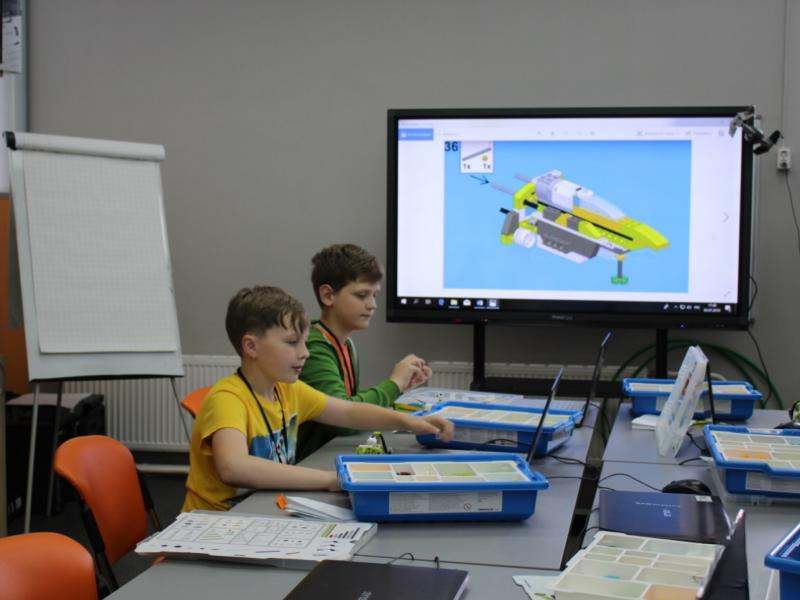
Virtual Reality Solution
As a solution, the center adopted special educational VR software designed for collaborative learning in virtual reality. The system runs on four networked computers with HTC VIVE headsets and lets teachers and students:
- Work together with shared 3D objects
- Interact with them in real time
- Connect through four networked computers and HTC VIVE headsets
Beyond education, the same software also works for:
- Engineering and design teams
- Manufacturers who need to review complex models
- Business presentations that require interactive 3D visualization
In all these cases, VR enables real-time interaction with complex 3D data in a way that standard screens cannot match..
How students study space systems at 1:1 scale
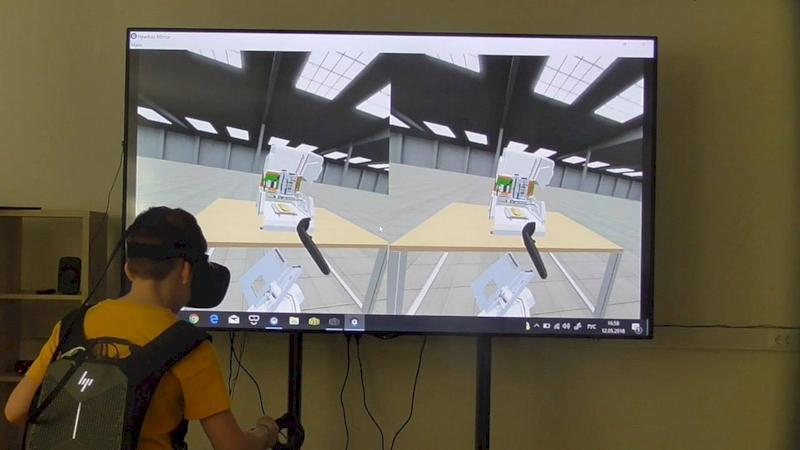
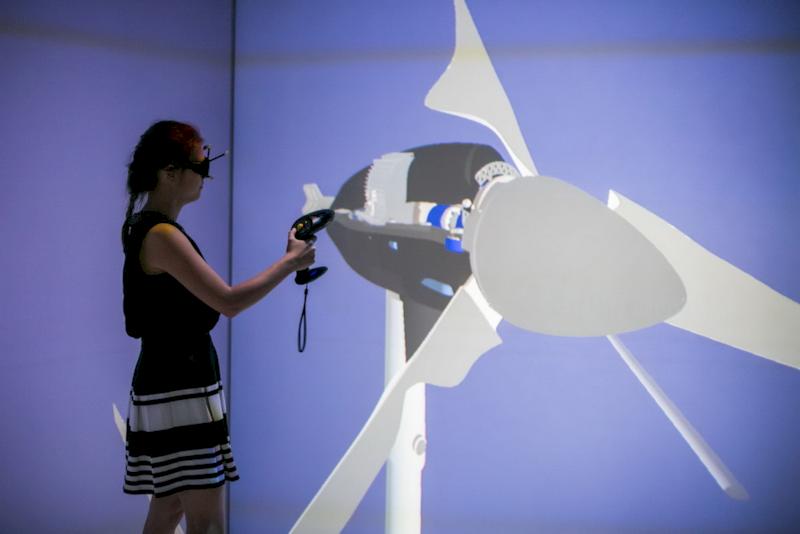
The center cannot 3D print life-sized spaceships in a classroom, but VR gives students another option: they can explore 1:1 scale virtual prototypes of rockets, satellites, and lunar stations.
In shared VR spaces, teachers can:
- Demonstrate the internal and external structure of space equipment
- Show how components connect and move
- Highlight design features that would be hard to see on 2D drawings or small physical models
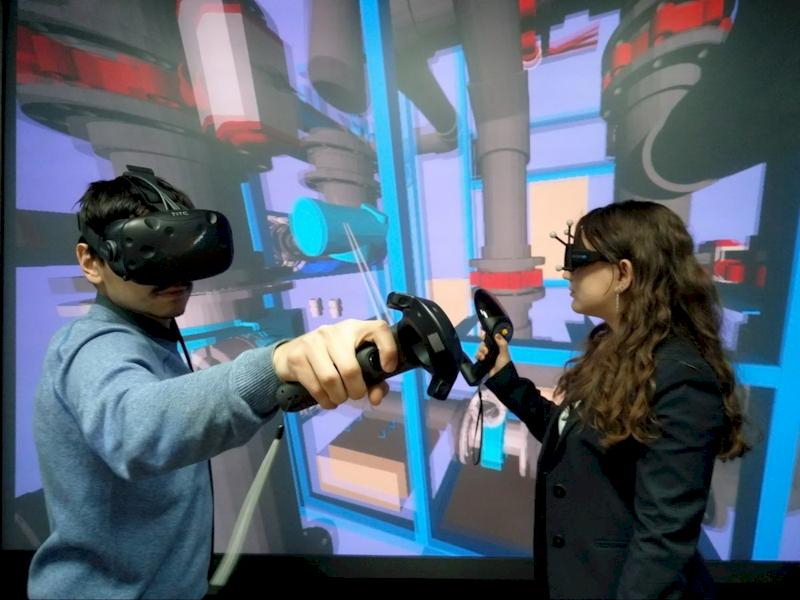
Students:
- Explore life-sized digital models of space project components
- View all joints and connections in 3D
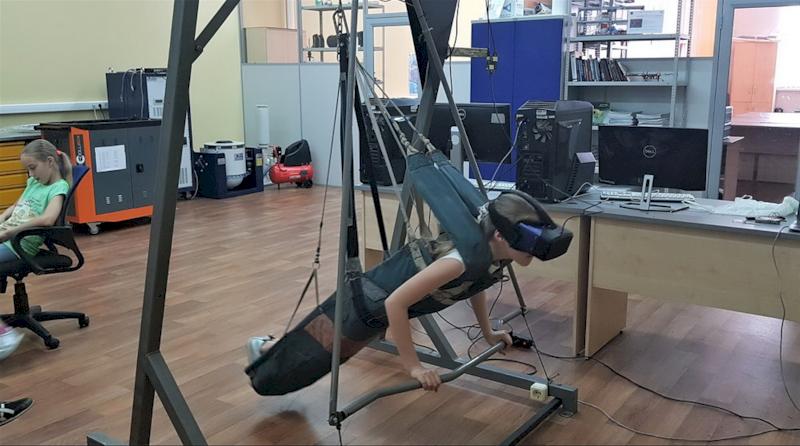
- Move around and even “inside” the models using VR
This gives them a realistic sense of size and proportion, which is essential for understanding complex space systems.
How virtual reality improves learning
Virtual prototyping and 1:1 immersive visualization:
- Increase student engagement
- Improve retention of technical material
- Draw attention to small details and nuances
- Reduce the need for expensive physical mockups
Students and teachers especially value that VR helps them see:
- How subsystems interact
- Where key nodes and assemblies are located
- How design choices affect the whole structure
The VR solution is also easy to use:
- Teachers start working with it without special programming skills
- CAD/BIM models upload in minutes
- Built-in tools support:
- Measurement
- Cross-sections and incisions
- Assembly and disassembly
The system supports realistic simulations, including:
- Virtual assembly of lunar stations
- Collaborative work using VR suits and tracked controllers
In practice, students learn to:
- Prototype in a virtual environment
- Test ideas safely
- Prepare for later work with real equipment and real-scale systems
Difficulties and limitations
The current software works best for organizations that already have their own 3D models. Right now:
-
The solution does not include a ready-made internal library of CAD/BIM models.
-
Building such a library would require large additional resources.
Until that happens, educators can use open sources like grabcad.com to download study-ready models and integrate them into lessons.
This approach still gives the center enough material to teach:
-
Space engineering
-
Mechanical design
-
Systems thinking
Results and conclusions
The center has used its virtual reality classroom for more than a year. During this time, future engineers:
-
Develop practical skills in virtual prototyping
-
Gain experience that matches the expectations of modern industry
-
Work with full-scale virtual prototypes that strengthen spatial thinking
Students also become familiar with Industry 4.0 concepts, including:
-
Digital twins
-
Integrated digital–physical workflows
Virtual reality helps teachers clearly explain the engineering behind:
-
Rockets
-
Satellites
-
Lunar stations
-
Other complex systems that cannot be brought into a classroom physically
This approach offers a uniquely visual and accessible way to study objects that are too large, expensive, or complex to reproduce in real life.
The VR software and hardware show not only the future of education, but its current potential.
Buy 3D scanners at Top3DShop to build realistic scale models for virtual reality education — our specialists will help you choose the best equipment for your tasks, classroom size, and budget, and support you as you integrate virtual reality into your training programs.
Write a comment